

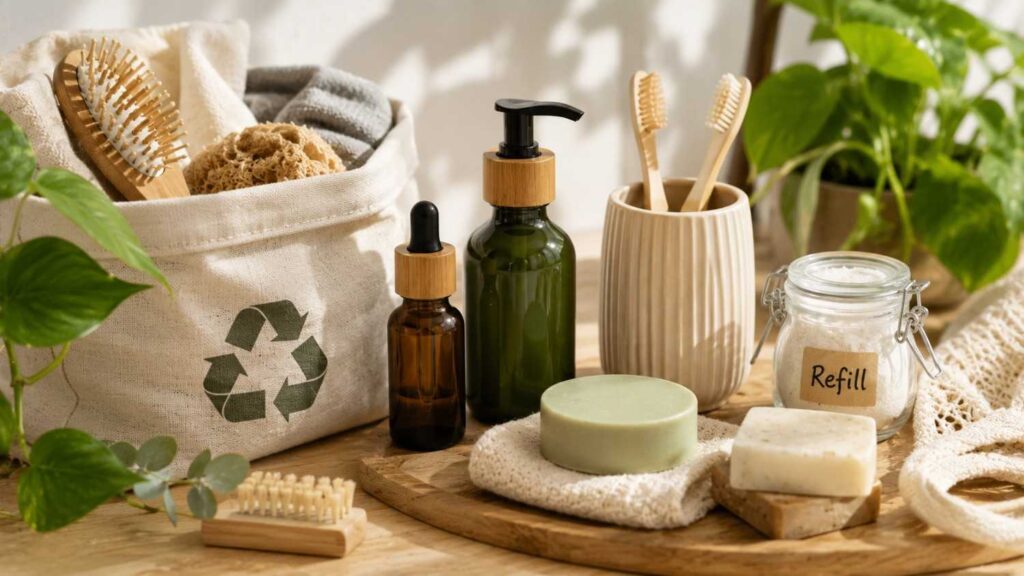
How to Reduce Waste in Your Beauty Routine: A Practical Guide
Understanding how to reduce waste in your beauty routine begins with a simple change in perspective. Instead of focusing only on buying products labeled as sustainable, look at the complete lifecycle of everything you use. Consider why you purchased it, how frequently you use it, how long it lasts, what kind of packaging it comes in, and what happens when it is empty.
Beauty waste is not limited to bottles and jars. It also includes unfinished formulas, forgotten samples, disposable wipes, single-use applicators, damaged tools, impulse purchases, oversized products, promotional packaging, and containers that cannot be recycled locally. Addressing these different sources requires a practical system rather than a collection of trendy product swaps.
The U.S. Environmental Protection Agency places source reduction and reuse above recycling in its waste-management hierarchy. Applied to beauty, this means buying fewer unnecessary products, using existing items responsibly, and keeping durable tools in service should usually take priority over purchasing new items simply because their packaging appears environmentally preferable.
A sustainable beauty routine should also remain affordable, safe, and realistic. A routine that is too complicated or expensive is difficult to maintain. The most successful strategy is gradual improvement: audit what you own, finish suitable products, simplify overlapping steps, choose better replacements, and learn how to dispose of packaging correctly. These actions create measurable progress without requiring perfection or an immediate zero-waste lifestyle.
Start With a Beauty-Routine Waste Audit
A beauty-routine waste audit provides the foundation for every improvement that follows. Without understanding what you currently buy, use, abandon, and discard, it is easy to focus on the wrong solutions. You may assume that plastic packaging is your largest problem when your greatest source of waste is actually unfinished skincare, unused makeup, free samples, or disposable cleansing products.
Begin by selecting a defined audit period. One month is usually long enough to reveal everyday patterns, although people with extensive collections may benefit from tracking products for six to eight weeks. During this period, avoid judging your past purchases. The purpose of the audit is to gather useful information, not to create guilt.
Separate waste into practical categories. These may include empty containers, partially used formulas, expired cosmetics, disposable tools, promotional packaging, shipping materials, and products that did not suit your needs. Record how frequently each type appears. This shows whether your routine is creating waste through consumption, poor product matching, excessive variety, or unsuitable packaging.
A detailed audit is useful for beginners because it makes an abstract sustainability goal easier to manage. It also provides advanced beauty consumers with evidence they can use to refine purchasing rules. Once you know which categories generate the most waste, you can prioritize the changes that are likely to produce the strongest result. This prevents random product swapping and creates a more intentional, sustainable beauty routine.
Inventory What You Already Own
Start your inventory by collecting beauty products from every location where they are stored. Check bathroom cabinets, handbags, travel cases, bedroom drawers, shower shelves, work bags, and unopened-delivery boxes. Products are often forgotten because they are scattered across several places rather than because a person deliberately owns too many.
Organize everything into practical categories such as facial skincare, makeup, haircare, body care, fragrance, nail products, grooming tools, and travel items. Within each category, label products as actively used, unopened, nearly empty, unsuitable, duplicated, or potentially expired. This process makes overbuying patterns immediately visible.
Pay particular attention to products that perform the same function. Several cleansers, facial oils, neutral eyeshadow palettes, dry shampoos, or nearly identical lip colors can indicate that novelty is replacing genuine need. Place frequently used and nearly empty products where they can be seen easily. Keep unopened backups together so you can check existing stock before shopping.
Create a simple written or digital list for categories that are easy to overbuy. The list does not need to include every ingredient or batch number. Product name, category, opening date, and status are usually enough. Reviewing this inventory before making a purchase can prevent duplicates, reduce forgotten products, and make it easier to use what you already own.
Track Empties and Unfinished Products
Empty products show what you genuinely use, while unfinished products reveal where your routine is losing money and creating preventable waste. Track both categories rather than celebrating empties without examining what remains abandoned in drawers or cabinets.
Keep clean empty packaging in a designated container for several weeks. Record the product type, how long it took to finish, whether you would purchase it again, and whether the container can be recycled locally. This information helps you estimate realistic consumption. For example, if one moisturizer lasts five months, buying three backups during a promotion may be unnecessary.
Create a separate list for products you stopped using. Note why each item failed. Common reasons include irritation, an unpleasant fragrance, difficult packaging, the wrong shade, a complicated application process, poor compatibility with other products, or unrealistic expectations created by marketing. These observations improve future purchasing decisions.
Do not force yourself to use a product that causes irritation or appears unsafe. The goal is to prevent similar mistakes, not to punish yourself for making one. Suitable unopened products may be returned according to the retailer’s policy or given to someone who will use them where hygiene rules allow. Tracking both successes and failures transforms your beauty collection into practical evidence for a more efficient routine.
Buy Less and Choose Products You Will Finish
Buying less is one of the most reliable ways to reduce waste because it addresses both packaging and unused formula. However, buying less does not mean eliminating products that support your comfort, confidence, health, or professional needs. It means becoming more selective about what earns a permanent place in your routine.
Before purchasing a product, identify the problem it is expected to solve. If you already own something that addresses the same need, determine why the existing option is inadequate. This pause can separate a necessary replacement from an impulse created by advertising, limited-edition packaging, social media, or a temporary trend.
Consider how the product will fit into your daily habits. A complex treatment may appear impressive, but it is unlikely to be finished if it requires several additional steps you rarely follow. Products with familiar textures, convenient packaging, compatible ingredients, and realistic application instructions are often more sustainable because they are easier to use consistently.
Price should be evaluated alongside expected use. A discounted product is not economical if it remains unfinished. Similarly, an expensive item is not automatically wasteful if it performs well, lasts an appropriate amount of time, and prevents repeated experimentation.
The most sustainable purchase is usually one that matches your established needs and will be used completely. By shifting attention from novelty to suitability, you can build a smaller collection that works more effectively. This approach reduces clutter, saves money, and limits the number of containers entering the waste and recycling system.
Simplify Overlapping Steps
Many beauty routines become complicated gradually. A person may add a new serum, primer, oil, mask, or treatment without reconsidering the products already in use. Over time, these additions create overlapping functions, longer routines, and a higher risk that several products will expire before they are finished.
Review each step and define its purpose. A basic skincare routine may include cleansing, moisturizing, and appropriate sun protection, with targeted products added when they serve a clear need. Haircare, body care, and makeup routines can be evaluated in the same way. The exact number of products matters less than whether every item has a distinct and regularly used role.
Simplification should not involve removing products prescribed or recommended by a qualified professional. It should focus on optional duplication. If three products provide similar hydration or several palettes contain nearly identical shades, decide which one you prefer and concentrate on using it.
A minimalist skincare routine is not automatically better for every person, but a deliberate routine is usually easier to maintain. Fewer overlapping products can make it easier to identify irritation, assess results, remember opening dates, and finish containers. Simplifying also gives you a clearer basis for future purchases because you know which steps are essential and which were added without providing meaningful value.
Choose the Right Size and Format
The largest container is not always the most sustainable or economical choice. Larger sizes can reduce packaging per application, but only when the product remains safe, effective, and desirable long enough to be finished. An oversized formula that expires or becomes unpleasant creates more waste than a smaller container used completely.
Choose travel or introductory sizes when trying an unfamiliar texture, shade, fragrance, or active formula. Although smaller packages may use more material per unit, they can prevent the greater waste created by abandoning a full-size product. Once a product becomes a proven favorite, a larger or refill format may become more appropriate.
Consider how the packaging affects use. Pumps may help control portions and reduce exposure to air, while tubes can make it easier to remove most of the formula. Wide jars may be convenient but require careful handling to avoid contamination. Solid products can reduce liquid-packaging needs, although they must be stored properly to prevent premature breakdown.
The correct format depends on your habits, storage space, climate, travel needs, and application preferences. Avoid assuming that bulk purchasing is automatically sustainable. A more useful question is whether the chosen size allows you to use the product consistently and safely before its quality declines. Matching the format to real consumption is an important part of reducing both packaging and formula waste.
| Common Beauty Habit | Low-Waste Alternative | Main Benefit | Best For |
|---|---|---|---|
| Buying multiple similar products | Finish one product before replacing it | Reduces product and packaging waste | Everyday skincare |
| Disposable makeup wipes | Reusable makeup remover pads | Less single-use waste | Daily makeup removal |
| Plastic shampoo bottles | Solid shampoo bars | Uses less packaging | Haircare routine |
| Single-use razors | Durable razor with replaceable blades | Long-term waste reduction | Regular shaving |
| Buying full-size products first | Start with travel or small sizes | Prevents unused product waste | Trying new products |
| Replacing products too early | Use products until safely finished | Reduces unnecessary purchases | Entire beauty routine |
Question Vague Green Claims
Environmental language on beauty packaging can be difficult to evaluate because many terms sound positive without providing measurable information. Words such as “green,” “natural,” “planet-friendly,” “conscious,” and “clean” may influence purchasing decisions, but they do not automatically explain how a product reduces waste or environmental impact.
Look for specific evidence behind each claim. A brand may state the percentage of post-consumer recycled material in a container, explain how much packaging was removed, provide instructions for separating components, or describe exactly where a refill is available. These details are more useful than a broad symbol or nature-inspired design.
The Federal Trade Commission’s Green Guides address environmental marketing claims and explain the importance of clear qualifications. For example, recyclable claims should reflect realistic access to recycling facilities, and refillable claims should be supported by a practical refill method. Consumers should not have to guess what part of a package is being described.
Also distinguish between product and packaging claims. A formula marketed as environmentally responsible may still come in difficult mixed-material packaging, while a recyclable container does not provide information about the ingredients. Evaluate each claim according to its scope.
A professional approach to sustainable shopping involves asking what is being claimed, what evidence supports it, and whether the benefit applies in your location. Specific information makes meaningful comparison possible and reduces the risk of purchasing products based mainly on greenwashing.
If you want practical examples of ingredient transparency and responsible packaging, these sustainable skincare practices provide useful context for evaluating environmental claims without relying on marketing language.
Replace Single-Use Items With Durable Alternatives
Single-use beauty products can create a steady stream of waste because they are discarded after one application. Common examples include cleansing wipes, cotton rounds, sheet masks, disposable razors, sponge-tip applicators, sample sachets, and individually wrapped treatments. Replacing selected items with durable alternatives can reduce recurring waste, but the replacement must be practical enough to use consistently.
Begin with the disposable product you purchase or discard most often. This creates a clearer result than buying several reusable items at once. For one person, washable makeup-removal pads may be the best starting point. For another, a durable razor handle, reusable manicure tool, or washable face cloth may have a stronger impact.
Consider the complete maintenance requirement before making a change. Reusable products must usually be washed, dried, stored, and eventually replaced. A reusable option that remains unwashed or unused does not provide a meaningful advantage. Choose materials and care requirements that fit your existing household routine.
Durability should also be evaluated realistically. A tool does not need to last forever to be useful, but it should remain functional long enough to replace repeated disposable purchases. Check whether individual parts can be repaired or replaced rather than discarding the complete item.
Reusable alternatives are not appropriate in every situation. Hygiene, medical treatment, professional services, travel conditions, and infection-control requirements may justify single-use products. The goal is not to eliminate disposables regardless of context. It is to identify where a durable alternative can perform safely and conveniently without creating unnecessary complexity.
Swap Wipes and Cotton Rounds Carefully
Disposable wipes and cotton rounds are often convenient, but they can become a significant source of routine waste when used daily. Washable face cloths and reusable makeup remover pads offer a practical alternative for many cleansing, toner, and makeup-removal tasks.
Choose reusable pads that feel comfortable on your skin and are suitable for the products you use. A heavily textured material may work well for removing durable makeup but feel too abrasive for sensitive areas. Softer fabrics may be more appropriate around the eyes, although persistent rubbing should still be avoided.
Hygiene is essential. Use clean pads, avoid leaving damp materials in a closed container, and wash them according to the manufacturer’s instructions. A mesh laundry bag can keep small pads together in the washing machine. Allow them to dry completely before storage, and replace any pad that develops a persistent odor, rough texture, staining that suggests incomplete cleaning, or structural damage.
Reusable pads are not suitable for every purpose. Follow professional guidance after cosmetic procedures, during infections, or when sterile materials are required. Disposable cotton may also remain appropriate for specific nail, medical, or first-aid applications.
The strongest waste reduction occurs when reusable makeup remover pads are used repeatedly over a long period. Begin with a manageable quantity rather than purchasing a large set before confirming that the system suits your routine.
Keep and Maintain Durable Tools
Beauty and grooming tools can provide years of service when they are selected carefully and maintained correctly. Durable items may include combs, brushes, tweezers, eyelash curlers, manicure tools, facial rollers, makeup brushes, reusable razors, and hair-removal devices.
Clean each tool according to its material and function. Makeup brushes may require regular washing to remove product buildup, while metal tools may need drying immediately after cleaning to prevent corrosion. Electrical devices should be maintained according to the manufacturer’s safety instructions rather than submerged or cleaned with unsuitable products.
Inspect tools for wear. Loose handles, cracked surfaces, rust, damaged bristles, exposed wiring, and misaligned cutting edges can affect both performance and safety. Repair or replace individual components when possible, but do not continue using a tool that could cause injury.
Avoid collecting duplicate tools unless they serve a genuine purpose. Owning several nearly identical brushes, combs, or facial devices increases storage demands and makes it less likely that each item will be used. Choose designs that are comfortable, easy to clean, and appropriate for your routine rather than purchasing a tool mainly because it is promoted as sustainable.
Long-term maintenance is what makes a durable product valuable. A reusable razor or brush only reduces waste when it remains in regular use and prevents repeated purchases of disposable alternatives. Care should therefore be treated as part of the sustainability decision.
Related Articles
Choose Refillable, Concentrated, or Lower-Packaging Products
Packaging choices become especially important after unnecessary purchasing and single-use waste have been addressed. Refillable, concentrated, solid, and lower-packaging formats can reduce material use, but none of these categories is automatically sustainable in every situation. Their value depends on design, transportation, product performance, local infrastructure, and repeated consumer use.
A refill system works best for a product you already purchase consistently. Buying an attractive refillable container for a formula you may not repurchase can create more material than selecting a simple conventional package. Similarly, a concentrated formula may reduce packaging but become wasteful if the instructions are confusing or the product does not suit your needs.
Evaluate the complete system rather than the outer appearance. Consider the permanent container, refill cartridge, labels, seals, caps, shipping materials, and disposal instructions. Some systems reduce material significantly, while others transfer the same amount of packaging into a different shape.
Lower-packaging options should also protect product quality. Packaging performs important functions, including preventing leakage, contamination, light exposure, air exposure, and accidental use. Removing material is beneficial only when the product remains safe and practical.
Advanced consumers may also compare recycled content, package weight, transportation efficiency, and component separation. Beginners can use a simpler rule: choose formats that are easy to use completely, available for repeat purchase, and supported by clear end-of-life instructions. A realistic packaging choice is more valuable than an idealized format that does not fit your routine.
Use Refills for Proven Favorites
Refillable beauty products can reduce packaging when the main container is retained and used through several refill cycles. The environmental value generally becomes stronger with repeated use because the durable outer package is not replaced with every purchase.
Before selecting a refill system, confirm that you genuinely like the formula. Consider purchasing the standard version first when samples are unavailable. Check whether refills are consistently offered, whether they can be ordered in your location, and whether the price encourages continued use. A refillable container has limited practical value when replacement cartridges are frequently unavailable.
Compare the refill with the original package. Some refills use flexible pouches or lightweight cartridges, while others include substantial plastic, pumps, or decorative components. Determine whether the refill itself can be recycled locally and whether the main container can be cleaned or maintained without compromising the product.
Avoid decanting formulas into incompatible containers unless the manufacturer provides instructions. Certain products depend on airless pumps, opaque materials, or controlled dispensers to preserve stability and hygiene.
The FTC notes that refillable claims should be supported by an actual method of refilling the package. Consumers should therefore look beyond the word “refillable” and evaluate the accessibility of the system.
For established products such as shampoo, cleanser, moisturizer, hand wash, or frequently used makeup, a well-designed refill system can become a practical part of a low-waste beauty routine.
Reviewing real-world refillable skincare options can also help you compare how different refill systems are designed before committing to a long-term routine.
Prefer Simple, Clearly Identified Packaging
Simple packaging is often easier to understand and sort than a container made from several permanently attached materials. Beauty packaging can include plastic bottles, glass jars, metal pans, paper sleeves, rubber droppers, steel springs, mirrors, magnets, adhesive labels, and decorative coatings. These combinations may create difficulties during mechanical recycling.
Look for packages that identify their primary material and explain whether components should remain attached or be separated. Clear instructions such as “remove pump,” “replace cap,” or “specialist recycling only” are more useful than a generic recycling symbol. Remember that the presence of a resin code does not guarantee local acceptance.
Packaging simplicity must be balanced with product protection. A basic tube may work well for a cleanser, while a light-sensitive formula may require opaque packaging. The most sustainable option is not necessarily the package with the fewest visible components; it is the design that protects the formula, supports full use, and has a realistic end-of-life route.
Dark colors, very small sizes, mixed materials, and residual formula can also affect recyclability. Check the rules of your local service rather than relying on assumptions about glass, metal, paper, or plastic.
When comparing similar products, clearly labeled mono-material packaging may provide an advantage. However, avoiding an unnecessary purchase still has greater value than buying a new product solely because its container appears easier to recycle.
Consider Solids and Concentrates Where They Work
Solid and concentrated beauty products may reduce the need for water-heavy formulas and conventional bottles. Common examples include shampoo bars, conditioner bars, cleansing bars, powdered masks, concentrated body washes, water-activated cleansers, and tablets designed to dissolve in reusable containers.
Performance should remain the first practical test. A shampoo bar that leaves your hair difficult to manage is unlikely to be finished, regardless of its packaging. Similarly, a powder that is inconvenient to measure may lead to overuse or abandonment. Choose products that match your skin, hair, climate, storage conditions, and daily routine.
Storage is particularly important for solid products. Bars that remain in standing water can soften, dissolve, or develop an unpleasant surface. Use a draining dish, rack, or ventilated container and allow the product to dry between uses. Concentrated formulas should be measured according to the instructions to prevent waste and irritation.
Travel convenience can be another benefit because many solid formats are compact and less likely to leak. However, verify airline or local requirements rather than assuming every product is unrestricted.
Solid shampoo and conditioner bars are useful examples of lower-packaging formats, but they are not a universal solution. A concentrated or solid product supports sustainability only when it performs effectively, remains stable in storage, and is used completely.
| Priority | Beauty Action | Practical Example | Key Check |
|---|---|---|---|
| 1. Reduce | Prevent unnecessary purchases | Finish one cleanser before purchasing another | Will I realistically finish the product? |
| 2. Reuse | Keep durable products in service | Refill a favorite compact or wash reusable pads | Will I use the item enough to justify it? |
| 3. Recycle | Recover locally accepted materials | Recycle a clean bottle according to municipal rules | Is the material and size accepted locally? |
| 4. Specialist disposal | Handle difficult materials responsibly | Use an approved take-back or hazardous-waste service | Does the program accept this exact item? |
This order reflects the EPA’s general preference for source reduction and reuse before recycling. It also provides a practical decision-making framework for beauty consumers. Preventing an unnecessary product usually produces a clearer benefit than purchasing it and attempting to recycle the packaging afterward.
Use Every Product Fully—but Keep Safety First
Using products completely can reduce waste and improve value, but it should never involve ignoring contamination, irritation, stability changes, or manufacturer instructions. The phrase “use every last drop” is helpful only when the product remains safe and suitable.
Begin by using products consistently and in the recommended amount. Excessive application does not create a more sustainable routine because it may waste formula and increase the risk of irritation. On the other hand, applying too little of a product that depends on adequate coverage may reduce effectiveness. Follow instructions for treatments, sunscreen, hair color, and other products where dosage matters.
Handle packaging carefully to access the formula without introducing contamination. Store items in the recommended position, keep closures clean, and avoid adding water, oil, or another substance unless the manufacturer specifically approves it. Altering a formula can affect its preservation system, texture, stability, and performance.
Knowing when to stop is equally important. A product should be discarded when it shows signs of contamination, causes an unexpected reaction, or changes significantly in odor, color, texture, or application. Eye products and items used directly on the lips may require particular care because they repeatedly contact sensitive areas.
A sustainable skincare routine must support health as well as waste reduction. The purpose is to prevent premature disposal through better purchasing, storage, and use—not to extend a product indefinitely. Safety is a necessary boundary within every low-waste strategy.
Apply the Amount You Actually Need
Portion control helps products last an appropriate amount of time and reduces unnecessary residue. Many people dispense more formula than needed because pumps, droppers, and open jars make quantity difficult to judge. Begin with a small amount and add more only when the product cannot be spread or applied effectively.
Use package instructions as the primary guide. Some products require a specific amount, frequency, or thickness to work as intended. Sunscreen, chemical treatments, hair color, exfoliating products, and medicated cosmetics should not be reduced arbitrarily in an attempt to make them last longer.
For ordinary moisturizers, cleansers, primers, and styling products, observe how much is left on your hands, tools, towels, or sink after application. Persistent residue may indicate that you are dispensing too much. Using a clean spatula for suitable jar products can improve portion control and reduce repeated finger contact.
Move flexible tubes from the sealed end toward the opening as they empty. Store pumps in the recommended position and allow viscous products time to settle. Avoid cutting containers open when the exposed formula cannot be stored hygienically or when sharp packaging creates a risk.
Efficient application should improve consistency rather than encourage extreme rationing. The goal is to use the correct amount, receive the expected benefit, and prevent avoidable excess from being washed away or discarded.
Store Cosmetics to Protect Shelf Life
Correct storage can help cosmetics remain stable and pleasant throughout their intended period of use. Heat, direct sunlight, moisture, air exposure, and repeated contamination can affect texture, fragrance, color, and preservation.
Keep containers tightly closed when they are not in use. Avoid storing products on a sunny windowsill, near a radiator, or inside a vehicle where temperatures may rise sharply. Bathrooms can be convenient, but steam and humidity may be unsuitable for some powders, tools, or products that require a dry environment.
Wash and dry your hands before applying products from jars. Do not share products that make direct contact with the eyes, lips, or irritated skin. Clean applicators regularly and avoid pumping mascara wands repeatedly, which can introduce more air into the container.
The U.S. Food and Drug Administration explains that cosmetic shelf life can be affected by microbial contamination, preservative breakdown, moisture, air, sunlight, and temperature changes. It also advises consumers not to add water or saliva to dry mascara.
Labeling opening dates can be useful for products you use slowly. However, visual and sensory changes also matter. Discard an item that develops an unusual odor, separation, discoloration, texture change, or unexpected effect. Proper storage can prevent premature waste, but it cannot make a compromised formula safe again.
Recycle and Dispose of Beauty Products Correctly
Recycling is often the most visible part of sustainable beauty, but it is also one of the most misunderstood. A package is not automatically recyclable simply because it is made from plastic, glass, metal, or paper. Recycling depends on local collection rules, sorting technology, material demand, container size, residue, and the way components are combined.
Beauty packaging presents particular challenges because many items are small or made from mixed materials. Pumps may contain metal springs, droppers combine glass and rubber, compacts may include mirrors and magnets, and tubes can contain several bonded layers. These features can make a package unsuitable for ordinary curbside processing.
Responsible beauty empties recycling begins with checking local guidance. Municipal websites, waste authorities, and collection providers usually explain which materials, sizes, and preparation methods are accepted. Follow those instructions even when they differ from a brand’s general statement.
Specialist take-back programs can provide another route for selected items, but acceptance rules must be reviewed carefully. A program may accept lipstick tubes while excluding aerosol products, electronic tools, full containers, or certain glass items.
Disposal also includes leftover formula. Products should not be poured into drains or placed in recycling while full unless local authorities specifically permit that method. Aerosols, nail polish, removers, and other products may require special handling.
A reliable system separates curbside recycling, specialist collection, ordinary waste, and household hazardous waste. This reduces confusion and limits wish-cycling.
Check Local Curbside Rules First
Local recycling rules should be the first reference point because recycling systems differ between cities, counties, and service providers. An item accepted in one community may be rejected in another due to equipment, contracts, market conditions, or collection methods.
Search the official website of your municipality or recycling provider. Look for guidance on plastic resin types, glass colors, metal packaging, paperboard, caps, pumps, labels, and minimum container size. Some programs ask residents to replace plastic caps, while others require caps to be removed. Follow the instructions provided for your collection system.
Empty containers thoroughly and clean them according to local requirements. They usually do not need to be spotless, but excessive residue can create problems. Do not place partially full cosmetics into a recycling bin. Remove nonaccepted accessories only when the program recommends separation.
Avoid wish-cycling, which means placing a questionable item in the bin in the hope that it will be recycled. This can contaminate material streams or create additional sorting work. When official guidance is unclear, contact the provider rather than relying on packaging design or social media advice.
The EPA recommends checking local authorities because accepted materials vary. This principle is especially important for recyclable beauty packaging, where small components and mixed materials are common. Local instructions should take priority over a general recycling symbol or an unqualified brand claim.
| Beauty Item | Preferred Disposal Method | Important Consideration | Waste Reduction Tip |
|---|---|---|---|
| Plastic skincare bottle | Local curbside recycling (if accepted) | Empty and clean before recycling | Buy refill versions when available |
| Glass serum bottle | Recycle according to local rules | Remove pumps if required | Reuse bottle if practical |
| Lotion pump | Beauty take-back program | Mixed materials may not be curbside recyclable | Keep reusable pumps when possible |
| Shampoo refill pouch | Follow local recycling guidance | Acceptance varies by location | Purchase refill systems repeatedly |
| Aerosol beauty products | Household hazardous waste (where required) | Never puncture containers | Buy only what you will use |
| Makeup compact with mirror | Specialty recycling or take-back | Mixed materials reduce recyclability | Choose refillable compacts |
Use Verified Take-Back Programs for Accepted Items
Beauty product take-back programs are designed to collect certain packages that may not belong in curbside recycling. These services may operate through retailers, brand partnerships, mail-in systems, or permanent collection locations.
Before participating, read the current acceptance list. Programs often define eligible product categories, materials, sizes, cleanliness standards, and exclusions. Do not assume that every beauty-related item is accepted. Full products, aerosols, nail polish, electronic devices, mirrors, brushes, and fragrance bottles may require different handling.
Pact Collective provides packaging guidelines that help consumers evaluate whether an item may be suitable for curbside recycling, a Pact collection stream, or disposal. TerraCycle also operates beauty-related recycling programs with program-specific requirements. Availability and terms can change, so verify instructions before traveling to a collection point or mailing materials.
Prepare items exactly as requested. Empty the packaging, remove excluded components, and avoid combining liquids or loose powders in the collection box. Incorrect items can increase sorting demands and may prevent material recovery.
Take-back programs should complement reduction and reuse rather than justify unnecessary purchasing. Saving a difficult container for specialist recycling is helpful, but choosing fewer products or a simpler package may prevent the waste entirely. Use verified programs as part of a broader system, particularly for products you genuinely need and cannot recycle through local services.
Treat Leftover or Hazardous Products Separately
Products containing leftover formula may require different handling from empty packaging. Pouring cosmetics, solvents, polish, fragrance, or concentrated treatments into a sink or toilet can introduce substances into wastewater systems and may violate local disposal guidance.
Begin by checking the label and the manufacturer’s instructions. Then consult your municipal waste or household hazardous waste service. Nail polish, nail-polish remover, certain aerosols, hair chemicals, and other flammable or solvent-based products may be accepted at designated collection events or permanent facilities.
Do not puncture, crush, burn, or deliberately empty an aerosol container unless local authorities provide specific instructions. A partially full pressurized can may present a different risk from an empty one. Keep products in their original containers with labels intact whenever possible so collection staff can identify them.
Avoid mixing leftover substances together. Chemical mixtures can react unpredictably and make safe handling more difficult. Store unwanted products away from children, pets, heat, and ignition sources until they can be disposed of correctly.
The EPA recommends consulting local programs for household hazardous waste and difficult materials. Because rules vary, an article cannot provide a universal disposal method for every cosmetic product.
Responsible disposal protects workers, households, wastewater systems, and recycling facilities. It is an essential part of learning how to recycle empty beauty products and manage containers that are not yet empty.
Follow a Simple 30-Day Low-Waste Beauty Plan
A structured 30-day plan can turn sustainability from an abstract intention into a manageable routine. The purpose is not to achieve a completely zero-waste bathroom within one month. Instead, the plan helps you understand your habits, make one or two meaningful changes, and create a system you can continue using.
During the first week, focus on observation rather than shopping. Collect products, identify duplicates, and note what you use daily. This prevents you from replacing items before understanding whether they are actually a source of waste.
In the second week, select one high-frequency disposable or frequently repurchased product. Research alternatives that suit your budget, skin, hair, and household routine. Delay the purchase until the existing product is finished whenever it remains safe to use.
During the final two weeks, improve storage, product rotation, and disposal. Move near-empty items to visible locations, label opening dates where helpful, and create separate areas for curbside recycling, specialist take-back, and hazardous-waste items.
Document the results at the end of the month. Record which changes were easy, which created inconvenience, and which product categories still produce unnecessary waste. This information is more valuable than following a generic list of swaps because it reflects your actual behavior.
The 30-day plan can be repeated for different categories, such as skincare, makeup, haircare, or travel products. Gradual improvement is usually more affordable and sustainable than replacing an entire routine at once.
Week 1—Inventory and Pause
The first week is dedicated to understanding what you own and temporarily pausing nonessential purchases. Gather products from all storage locations and divide them into categories. Place duplicates together so you can see whether you have enough cleanser, moisturizer, shampoo, makeup, or body care to last several months.
Identify products that are nearly empty, unopened, rarely used, or potentially expired. Move near-empty essentials to the front of shelves and drawers. This simple form of product rotation makes it easier to finish one item before opening another.
During the purchase pause, continue replacing necessary products only when no suitable alternative remains. The purpose is not deprivation. It is to interrupt automatic shopping and give yourself time to evaluate needs.
Keep a short note whenever you feel tempted to buy something. Record the product, the reason, and whether an existing item could serve the same purpose. At the end of the week, review the list. Many impulses will have passed, while genuine needs will remain clear.
Also begin collecting clean empties so you can study the packaging. Check whether the materials are accepted locally and identify containers that require specialist disposal. By the end of the first week, you should have a clear picture of your collection, consumption patterns, and highest-priority waste category.
Week 2—Make One High-Use Swap
During the second week, select one disposable product or recurring purchase that creates a noticeable amount of waste. The best choice is usually an item you use several times a week, such as cotton rounds, cleansing wipes, disposable razors, small shampoo bottles, or individually wrapped treatments.
Research one realistic alternative. Compare performance, maintenance, cost, storage, and end-of-life options. For reusable products, determine how they will be washed and dried. For refill systems, confirm that replacements are available and suitable for repeated purchase. For solid or concentrated formulas, consider compatibility with your skin, hair, and routine.
Finish the existing product first when it remains safe and usable. This prevents a sustainability swap from creating immediate disposal. Avoid buying several alternatives for comparison unless smaller trial formats are necessary to prevent a larger purchasing mistake.
Use the new option consistently for the remainder of the month. Note any challenges, such as laundering requirements, difficult storage, skin sensitivity, or inconvenient refilling. A useful sustainable swap should fit your life without requiring excessive effort.
At the end of the week, decide whether the alternative is likely to remain part of your routine. A successful change should reduce recurring waste while maintaining acceptable comfort, hygiene, and performance. One durable habit is more valuable than several abandoned products marketed as eco-friendly.
Weeks 3 and 4—Create an End-of-Life System
The final two weeks focus on what happens when products reach the end of their useful life. Without a clear system, empty packages often accumulate in drawers or enter the wrong waste stream.
Create separate labeled containers for curbside recycling, specialist take-back, ordinary waste, and household hazardous waste. Keep the system simple and proportional to your space. A small box or divided bin is usually enough for a household beauty routine.
Review every empty item before placing it in a category. Check local recycling rules, remove components only when instructed, and confirm specialist-program acceptance. Keep hazardous products in their original containers and store them safely until an approved collection opportunity is available.
Use this period to review storage and product rotation. Move older products forward, keep backups behind active items, and record opening dates for formulas you use slowly. Clean reusable tools and create a regular maintenance schedule.
At the end of day 30, count the types of waste you produced rather than focusing only on the total number of containers. Identify which products were avoidable, recyclable, reusable, or difficult to manage. Choose one improvement for the next month.
This system supports long-term progress because it connects purchasing with disposal. When you understand how difficult an item is to recycle or safely discard, you can make a better decision before buying it again.
Quick Answer About How to Reduce Waste in Your Beauty Routine
The most effective way to reduce waste in your beauty routine is to prevent unnecessary products and packaging from entering your home in the first place. Begin by finishing safe products you already own, identifying duplicate items, and delaying replacements until they are genuinely needed. Once you understand your consumption habits, choose durable tools, practical refills, concentrated formulas, and lower-packaging options for products you purchase repeatedly.
A low-waste routine should be based on consistent habits rather than a complete shopping overhaul. Replacing every product with a newly purchased “sustainable” version can create more waste than continuing to use what you already have. The better approach is to make gradual changes when products run out or tools need replacing.
Recycling also plays a role, but it should come after reduction and reuse. Beauty containers often include pumps, mirrors, springs, droppers, labels, magnets, and several types of plastic. These components may not be accepted through ordinary curbside programs. Check local recycling instructions, separate removable components when required, and use verified beauty product take-back programs for accepted hard-to-recycle packaging.
Product safety must remain part of every decision. Store cosmetics correctly, avoid sharing products that may become contaminated, and discard anything that develops an unusual smell, color, texture, or performance. Sustainable beauty should reduce unnecessary waste without encouraging unsafe product use.
Frequently Asked Questions About Reducing Waste in a Beauty Routine
The following questions address common concerns raised by people who want to build a more sustainable beauty routine without compromising hygiene, performance, affordability, or convenience. Many consumers begin by searching for a list of zero-waste beauty tips, but the most useful answers are rarely absolute. Packaging systems vary, local recycling rules differ, and personal needs influence whether a reusable or refillable option is genuinely practical.
A product that reduces waste for one person may not provide the same benefit for someone with different skin sensitivities, storage conditions, purchasing habits, or access to refill and recycling services. For that reason, the answers below focus on decision-making principles rather than universal product recommendations.
The central principle is to prioritize reduction, responsible use, and reuse before recycling. Finish suitable products, avoid unnecessary duplication, and choose replacements based on proven needs. When considering a new format, evaluate the complete system, including the original package, refill, cleaning requirements, and disposal route.
Safety should remain non-negotiable. Reusable materials must be cleaned appropriately, expired or contaminated formulas should be discarded, and hazardous products should follow local disposal instructions. Sustainability should never depend on stretching a product beyond safe use.
These answers are designed to work for beginners while still offering useful evaluation criteria for experienced consumers. They can also support voice search and answer-engine results because each response addresses a defined question directly before adding important qualifications and practical guidance.
What Is the Easiest Way to Make a Beauty Routine More Sustainable?
The easiest starting point is to buy less and finish safe products you already own. This requires no new equipment, specialist knowledge, or immediate financial investment. Review your collection, identify duplicates, and avoid replacing a product until the current item is empty or no longer suitable.
After reducing unnecessary purchases, choose one frequently used disposable to replace. Washable makeup-removal pads, a durable razor, or a refill for a proven favorite may be practical options, depending on your routine. Introduce only one change at a time so you can assess whether it is convenient and effective.
Create a simple disposal system for empty containers. Check local recycling rules and set aside accepted specialist items separately. Do not place questionable packages into the recycling bin without confirmation.
A more sustainable routine does not require perfect products or a complete zero-waste lifestyle. Consistent habits usually matter more than dramatic changes. Using what you own, purchasing deliberately, maintaining tools, and disposing of materials correctly can significantly improve the efficiency of your routine. Begin with the category that creates the most visible waste, then repeat the process gradually.
Can Makeup Containers Go in Curbside Recycling?
Some makeup containers can enter curbside recycling, but many cannot. Acceptance depends on the material, size, color, remaining formula, and the way different components are attached. Small lipstick tubes, mascara containers, compacts, pumps, mirrors, and mixed-material palettes are commonly difficult for standard systems to process.
Check the official instructions issued by your municipality or recycling provider. Do not rely only on a recycling symbol or resin code. A symbol may identify a material without confirming that local facilities collect and process it.
Empty the container thoroughly and clean it according to local requirements. Remove pumps, mirrors, magnets, brushes, or other components only when your recycling program instructs you to do so. Separating materials incorrectly can make sorting more difficult.
When curbside recycling is unavailable, look for a verified beauty-packaging take-back program. Confirm that the program accepts the exact item before dropping it off. Different programs may have different rules for compacts, lipstick tubes, glass fragrance bottles, and applicators.
If no appropriate recycling route exists, place the item in ordinary waste according to local guidance. Wish-cycling does not improve sustainability and may contaminate otherwise recyclable materials.
Are Refillable Beauty Products Actually Sustainable?
Refillable beauty products can reduce packaging when the original container is durable and used through multiple refill cycles. The benefit is strongest when the refill uses significantly less material than a complete replacement and remains consistently available.
Evaluate the whole system before purchasing. Consider the permanent container, refill cartridge, shipping package, caps, seals, and any cleaning requirements. A decorative outer case combined with a substantial single-use refill may provide less material reduction than expected.
Your behavior also matters. A refillable product is unlikely to reduce waste if you purchase only one refill before switching brands, shades, or formulas. Refills are therefore most suitable for established favorites such as cleansers, moisturizers, shampoos, body products, and frequently used makeup.
Check whether the refill can be recycled locally and whether the original container is designed for safe long-term use. Some formulas depend on airless packaging, opaque materials, or sealed cartridges and should not be transferred into unrelated containers.
Refillable products are not automatically sustainable, but a well-designed system used repeatedly can support a low-waste beauty routine. Look for specific information about material reduction, refill access, and disposal rather than relying solely on the word “refillable.”
What Should I Do With Expired Cosmetics?
Stop using a cosmetic that has developed an unusual smell, color, texture, separation, or performance. Products that cause irritation, appear contaminated, or have been exposed to unsuitable conditions should also be discontinued, even when some formula remains.
Check the package for expiration information, period-after-opening guidance, and manufacturer instructions. Opening dates can be useful for products used slowly, particularly eye products, liquid formulas, and items stored for seasonal use.
Do not add water, saliva, oil, or another substance to restore a dried or thickened cosmetic unless the manufacturer specifically instructs you to do so. Altering the formula can affect preservation and introduce contamination.
For disposal, separate the product from ordinary recycling if the container is not empty. Check local guidance for the formula and packaging. Nail polish, remover, aerosols, and certain chemical products may require household hazardous waste collection. Do not pour products down a drain unless your local authority or the manufacturer confirms that method is appropriate.
Once the product is safely emptied or managed, evaluate the packaging according to curbside or specialist recycling rules. Record why the item expired unfinished so you can choose a smaller size, different format, or more suitable product in the future.
Are Reusable Makeup Remover Pads Hygienic?
Reusable makeup remover pads can be hygienic when they are cleaned, dried, and stored correctly. Use a fresh pad whenever necessary, particularly around the eyes or on irritated skin. Avoid leaving used pads damp in a closed container because moisture can encourage odor and microbial growth.
Follow the care instructions provided by the manufacturer. Many pads can be washed in a mesh laundry bag to prevent them from becoming lost or trapped in the machine. Use a detergent suitable for your skin and rinse thoroughly if residue is a concern.
Allow pads to dry completely before storing them in a clean, ventilated location. Replace pads that become rough, damaged, persistently stained, or difficult to clean. Reusable does not mean permanent; materials should remain comfortable and functional.
Do not share reusable pads between people. Extra care may also be required during eye infections, skin conditions, or recovery from cosmetic procedures. In those situations, follow the guidance of a qualified professional, who may recommend sterile or disposable materials.
When maintained correctly and used repeatedly, washable pads can replace many disposable cotton rounds and wipes. Their sustainability depends on regular use, responsible laundering, and appropriate replacement rather than the reusable label alone.
How Can I Avoid Greenwashing When Buying Beauty Products?
Avoiding greenwashing begins with looking for specific, verifiable information instead of relying on broad environmental language. Terms such as “green,” “clean,” “natural,” “planet-friendly,” and “conscious” may sound meaningful but can describe very different practices.
Identify exactly what the claim applies to. Is the company discussing the formula, the outer carton, the container, the manufacturing process, the transportation method, or the complete product? A recycled paper box does not necessarily mean that the primary package is recyclable, and recyclable packaging does not describe the formula.
Look for measurable details such as the percentage of post-consumer recycled content, the amount of packaging reduced, refill availability, clear material identification, or an accessible take-back program. Certifications should explain what has been certified and by whom.
Review qualifications and limitations. A package described as recyclable may only be accepted in certain locations. A refillable container may require a specific store or cartridge that is unavailable in your region.
The FTC Green Guides provide useful principles for evaluating environmental claims, including the need for clear and nonmisleading qualifications. Consumers should favor brands that communicate specific benefits, limitations, and disposal instructions. Transparent information allows meaningful comparison and reduces dependence on attractive packaging or vague sustainability language.
Conclusion
Learning how to reduce waste in your beauty routine is not about replacing every product with a new item marketed as sustainable. It is about building a more deliberate system for buying, using, maintaining, and disposing of beauty products.
The process begins with an honest inventory. Identify duplicates, forgotten products, unfinished formulas, and the categories that generate the most frequent waste. Use this information to create purchasing rules based on actual consumption rather than trends, discounts, or attractive packaging.
Reduction should remain the first priority. Finish suitable products, simplify overlapping steps, choose appropriate sizes, and delay replacements until they are genuinely needed. Reusable tools, refillable beauty products, concentrates, and solid formats can support further improvement when they fit your habits and are used consistently.
Safety must guide every decision. Store cosmetics correctly, maintain reusable tools, and discard products that become contaminated or show significant changes. Do not stretch the useful life of a formula simply to avoid waste.
Recycling should be treated as a location-specific process rather than a universal solution. Follow municipal rules, avoid wish-cycling, and use verified take-back services for accepted hard-to-recycle packaging. Contact household hazardous waste authorities when products require specialist disposal.
A sustainable beauty routine develops through repeated, manageable choices. Start with one category, measure the result, and continue refining your system. Consistent progress will usually reduce more waste than an expensive or unrealistic attempt to create a perfect routine overnight.
