

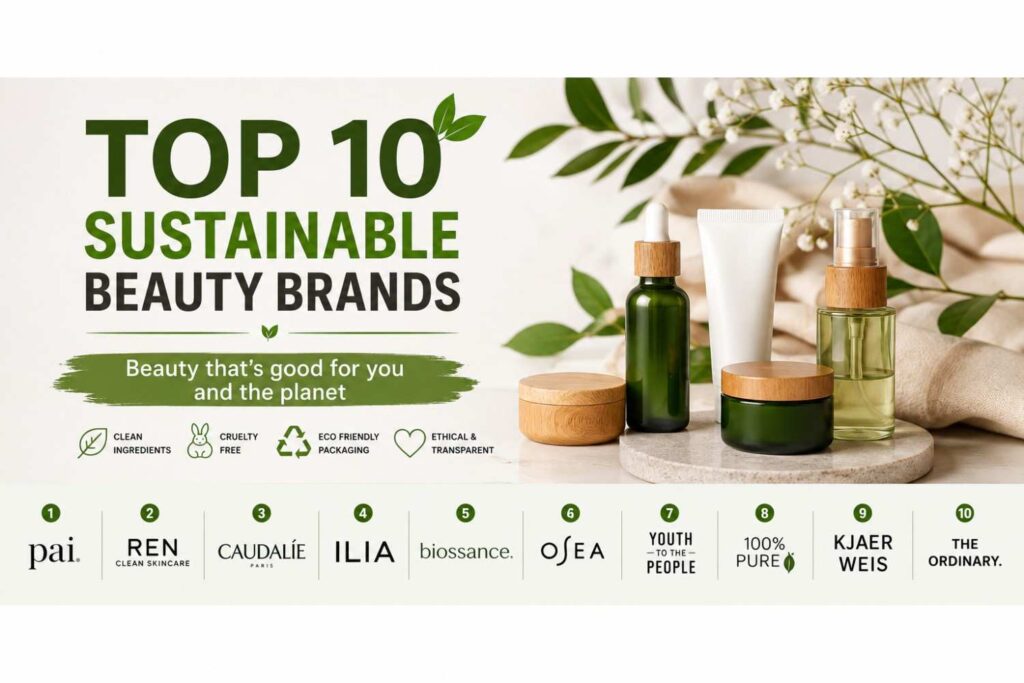
Top 10 Sustainable Beauty Brands for Ethical Skincare
The global beauty industry is undergoing a significant transformation, driven by rising consumer awareness about environmental impact, ingredient safety, and ethical production practices. Sustainability is no longer a niche preference—it has become a defining standard for modern skincare and cosmetics. Consumers today are increasingly questioning where their products come from, how they are made, and what long-term effects they have on both personal health and the planet.
As a result, the Top 10 Sustainable Beauty Brands highlighted in this guide are not just cosmetic companies; they are part of a broader movement toward responsible beauty. These brands are redefining industry norms by prioritizing clean formulations free from harmful chemicals, sourcing raw materials through ethical and traceable supply chains, and adopting environmentally conscious packaging solutions such as recyclable, biodegradable, or refillable containers. Many of them also invest in cruelty-free testing methods and support fair-trade partnerships with farming communities around the world.
What sets these brands apart is their holistic approach to sustainability. Instead of focusing on a single aspect—such as organic ingredients or plastic reduction—they integrate sustainability across every stage of their product lifecycle, from ingredient harvesting and manufacturing to distribution and post-consumer waste management. This ensures that their environmental footprint is minimized while maintaining high-performance skincare and makeup results.
What Makes a Beauty Brand Sustainable?
Sustainability in the beauty industry goes far beyond attractive packaging, eco-friendly slogans, or temporary “green” marketing trends. A truly sustainable beauty brand is built on a long-term, transparent commitment to reducing environmental harm while maintaining high performance, safety, and ethical responsibility across every stage of its operations. From the way ingredients are grown and harvested to how products are manufactured, packaged, and disposed of, every decision plays a role in determining whether a brand is genuinely sustainable or simply following a marketing trend.
Modern consumers are increasingly aware that beauty products can have a significant environmental footprint. As a result, sustainable brands are expected to meet higher standards that balance skin health, ethical responsibility, and environmental protection. This involves careful ingredient selection, responsible sourcing practices, eco-conscious production systems, and innovative packaging solutions that reduce waste and pollution.
Clean and Safe Ingredients
One of the most essential pillars of sustainable beauty is the use of clean, safe, and responsibly formulated ingredients. Sustainable brands prioritize plant-based, naturally derived, and biodegradable components that are gentle on the skin and less harmful to the environment after disposal. Instead of relying on harsh synthetic chemicals commonly found in conventional cosmetics, such as parabens, sulfates, phthalates, and artificial fragrances, these brands focus on safer alternatives that support both skin health and ecological balance.
Many sustainable formulations incorporate botanical extracts, essential oils, cold-pressed plant oils, and mineral-based compounds that provide effective skincare benefits without causing long-term environmental damage. These ingredients are often chosen not only for their performance but also for their ability to break down naturally without contaminating waterways or soil systems. Additionally, clean ingredient sourcing often includes strict testing and certification processes to ensure safety, purity, and ethical compliance.
Ethical Sourcing Practices
Ethical sourcing is another cornerstone of sustainable beauty, ensuring that raw materials are obtained in a way that respects both people and the planet. This means avoiding exploitative labor practices, supporting fair wages, and maintaining safe working conditions for farmers and workers involved in the supply chain. Many sustainable beauty companies partner directly with local farmers, cooperatives, and fair-trade organizations to source key ingredients such as shea butter, aloe vera, coconut oil, argan oil, and various botanical extracts.
These partnerships not only ensure fair compensation but also help strengthen local economies and promote long-term community development. Ethical sourcing also emphasizes environmental preservation by encouraging responsible farming methods that protect biodiversity, prevent deforestation, and maintain soil health. Transparency is a key part of this process, allowing consumers to trace ingredients back to their origin and better understand the journey of their skincare products from source to shelf.
Low Environmental Impact Production
Sustainable production practices focus on minimizing the environmental footprint associated with manufacturing and distribution. This includes reducing greenhouse gas emissions, conserving water, lowering energy consumption, and minimizing industrial waste. Many forward-thinking beauty brands are transitioning toward renewable energy sources such as solar or wind power to run their manufacturing facilities, significantly decreasing their reliance on fossil fuels.
In addition, sustainable production often involves more efficient formulation techniques that reduce excess waste and optimize resource usage. Water-saving production methods, biodegradable cleaning agents, and closed-loop manufacturing systems are increasingly being adopted to further reduce environmental impact. Some companies also implement zero-waste initiatives, where leftover materials are recycled or repurposed instead of being discarded. By improving every stage of production, these brands are able to maintain high-quality products while actively contributing to a cleaner and more sustainable future for the beauty industry.
Why Sustainable Beauty Matters Today
The shift toward sustainability in the beauty industry is far more than a passing consumer trend—it is a necessary and urgent response to some of the most pressing environmental and ethical challenges of our time. As global pollution levels rise and natural resources become increasingly strained, industries across the board are being forced to rethink how they operate. The beauty sector, which produces billions of units of packaging and countless chemical formulations every year, plays a significant role in this transformation.
Today’s consumers are more informed than ever before. They actively research ingredients, question brand ethics, and evaluate the environmental impact of their purchases. This growing awareness has created strong demand for clean, transparent, and responsible beauty solutions. As a result, sustainable beauty is no longer a niche category reserved for eco-conscious shoppers—it is becoming a mainstream expectation that shapes product innovation and brand identity worldwide.
Reducing Plastic Waste
One of the most visible environmental issues linked to the beauty industry is plastic pollution. Traditional skincare and cosmetic products often rely on single-use plastic packaging, including bottles, jars, tubes, and applicators. These materials frequently end up in landfills or oceans, where they can take hundreds of years to decompose and often break down into harmful microplastics that persist in ecosystems.
Sustainable beauty brands are actively addressing this issue by rethinking packaging design and material usage. Many companies now prioritize recyclable materials such as glass, aluminum, and post-consumer recycled plastics. Others adopt refillable systems that allow customers to reuse primary containers multiple times, significantly reducing overall waste. Some brands go even further by eliminating plastic packaging altogether and introducing solid-format products like shampoo bars, cleansing bars, and concentrated skincare balms.
These innovations not only reduce environmental harm but also encourage consumers to adopt a more mindful and circular approach to consumption, where reuse and recycling become part of everyday beauty routines rather than an afterthought.
Protecting Biodiversity
Beyond packaging, the ingredients used in beauty products can also have a significant impact on ecosystems and biodiversity. Conventional skincare formulations sometimes include synthetic chemicals, microplastics, and non-biodegradable compounds that can enter waterways after use. Once in aquatic environments, these substances may harm marine life, disrupt ecosystems, and contribute to long-term environmental degradation.
Sustainable beauty brands take a different approach by carefully selecting ingredients that are safe, biodegradable, and environmentally compatible. They avoid harmful additives such as microbeads, silicones that do not break down easily, and certain synthetic preservatives that can accumulate in nature. Instead, they prioritize naturally derived ingredients that decompose safely without leaving toxic residues behind.
Many of these brands also support biodiversity at the source by promoting sustainable farming practices, protecting endangered plant species, and sourcing ingredients in ways that do not contribute to deforestation or habitat destruction. This helps preserve ecological balance while ensuring that future generations can continue to benefit from natural resources.
Supporting Ethical Consumerism
The rise of sustainable beauty is closely linked to the broader movement of ethical consumerism, where purchasing decisions are guided not only by price and performance but also by values such as fairness, transparency, and environmental responsibility. Consumers increasingly expect brands to be accountable for how they treat workers, source materials, and manage environmental impact.
By choosing sustainable beauty products, consumers actively support companies that prioritize ethical labor practices, fair wages, and responsible sourcing. This creates economic incentives for more brands to adopt similar standards, gradually shifting the entire industry toward more responsible behavior.
Transparency plays a crucial role in this process. Sustainable brands are often more open about their supply chains, ingredient origins, and production methods, allowing consumers to make informed choices. As demand for ethical products continues to grow, it drives positive competition among brands, encouraging innovation in cleaner formulations, greener packaging, and more responsible business models.
Ultimately, sustainable beauty matters because it connects everyday personal care choices with global environmental and social impact. Each purchase becomes part of a larger movement toward a more conscious, responsible, and balanced beauty industry.
Sustainable Beauty Overview
| Aspect | What It Means | Why It Matters | Key Practices in Sustainable Beauty |
|---|---|---|---|
| Clean & Safe Ingredients | Use of non-toxic, plant-based, and biodegradable ingredients in skincare and cosmetics | Protects skin health and reduces environmental pollution from chemical runoff | Avoids parabens, sulfates, synthetic fragrances; uses botanical extracts, essential oils, mineral-based formulas |
| Ethical Sourcing | Responsible procurement of raw materials from fair-trade and transparent supply chains | Supports fair wages, protects workers, and preserves natural ecosystems | Partnerships with local farmers, fair-trade cooperatives, sustainable harvesting of ingredients like shea butter and coconut oil |
| Low Environmental Impact Production | Eco-friendly manufacturing processes that reduce waste, energy use, and emissions | Helps reduce carbon footprint and industrial pollution | Renewable energy usage, water-efficient systems, zero-waste production, optimized manufacturing processes |
| Reducing Plastic Waste | Minimizing or eliminating single-use plastic in product packaging | Reduces landfill waste and ocean pollution caused by plastic accumulation | Refillable containers, recyclable packaging, biodegradable materials, solid beauty products like shampoo bars |
| Protecting Biodiversity | Using ingredients and processes that do not harm ecosystems or marine life | Preserves natural habitats and maintains ecological balance | Avoiding microbeads and harmful chemicals, using biodegradable formulations, supporting sustainable farming |
| Supporting Ethical Consumerism | Encouraging responsible purchasing decisions aligned with ethical and environmental values | Drives industry-wide change toward sustainability and transparency | Fair labor practices, cruelty-free testing, transparent labeling, eco-conscious brand accountability |
Criteria Used to Select the Top 10 Sustainable Beauty Brands
Not every brand that labels itself as “natural,” “eco,” or “green” truly meets the standards of sustainability. In today’s beauty market, greenwashing—where companies exaggerate or misrepresent their environmental efforts—is increasingly common. For this reason, identifying the Top 10 Sustainable Beauty Brands requires a careful, evidence-based evaluation of multiple factors that go beyond marketing claims. Each brand must demonstrate genuine accountability across sourcing, formulation, production, and packaging.
A truly sustainable beauty brand is not defined by a single feature but by a consistent commitment across its entire business model. The following criteria are used to assess whether a brand deserves recognition as truly sustainable and ethically responsible.
Certifications and Standards
Certifications are one of the most reliable ways to verify a brand’s sustainability claims because they are issued by independent organizations that enforce strict guidelines. These certifications act as third-party validation, ensuring that products meet established ethical, environmental, and safety benchmarks.
Commonly recognized certifications include cruelty-free certifications, which confirm that no animal testing is involved at any stage of product development, and vegan certifications, which ensure that no animal-derived ingredients are used. In addition, USDA Organic and similar organic certifications verify that ingredients are grown without harmful pesticides, synthetic fertilizers, or genetically modified organisms.
Fair-trade certifications are equally important, as they guarantee that workers and farmers involved in ingredient sourcing are paid fairly and operate under safe working conditions. Together, these certifications help consumers distinguish between genuine sustainability and misleading marketing claims, providing a higher level of trust and transparency.
Transparency in Ingredients
Ingredient transparency is another essential criterion when evaluating sustainable beauty brands. A truly responsible company openly discloses every ingredient used in its formulations without hiding behind vague terms such as “fragrance blend” or complex chemical descriptions that are difficult for consumers to understand.
Brands committed to clean beauty typically provide full ingredient lists along with clear explanations of their purpose and origin. This level of transparency helps consumers make informed decisions about what they are applying to their skin and reduces the risk of exposure to potentially harmful or irritating substances.
Additionally, transparent brands often avoid controversial ingredients such as parabens, sulfates, phthalates, and synthetic dyes. Instead, they prioritize safe, naturally derived, or scientifically validated alternatives that are both effective and environmentally responsible. Transparency also extends to communication practices, where brands openly share sourcing details, testing methods, and environmental impact reports.
Packaging Innovation
Packaging is one of the most visible and measurable indicators of a brand’s environmental responsibility. Since the beauty industry generates a significant amount of plastic waste globally, packaging innovation plays a critical role in reducing ecological impact.
Leading sustainable beauty brands are moving away from traditional single-use plastics and adopting more environmentally conscious alternatives. These include recyclable materials such as glass and aluminum, biodegradable packaging made from plant-based materials, and post-consumer recycled plastics that reduce the demand for virgin resources.
In addition, many brands are introducing refillable packaging systems, allowing consumers to reuse containers multiple times instead of discarding them after a single use. This approach not only reduces waste but also encourages long-term consumer engagement with sustainable practices.
Some companies are also experimenting with zero-waste packaging solutions, such as solid beauty products that eliminate the need for liquid containers altogether. These innovations demonstrate how packaging design can significantly influence sustainability outcomes while maintaining convenience and product quality.
Top 10 Sustainable Beauty Brands Overview
The global shift toward clean, ethical, and environmentally responsible beauty has led to the rise of several standout brands that are redefining industry standards. These companies are not only focused on delivering high-performance skincare and cosmetics but are also actively working to reduce environmental harm, improve ingredient transparency, and promote ethical sourcing practices. Together, they represent a powerful movement toward a more conscious and sustainable future in beauty.
Each brand listed below contributes uniquely to the sustainable beauty ecosystem, whether through luxury natural formulations, biotechnology-driven skincare innovation, or zero-waste packaging systems. Their combined influence demonstrates that sustainability and effectiveness can coexist without compromise.
Premium Sustainable Beauty Brands
Tata Harper
Tata Harper is widely recognized for its luxury, farm-to-face skincare philosophy. The brand grows many of its ingredients on its own farm, ensuring full control over quality and sustainability. Its formulations are 100% natural and free from synthetic chemicals, focusing on high-performance botanicals that deliver visible results. What sets it apart is its commitment to small-batch production, which helps maintain freshness while reducing industrial waste and overproduction
Aveda
Aveda has long been a pioneer in sustainable haircare and beauty innovation. The brand integrates plant-based science with environmental responsibility, using naturally derived ingredients and renewable energy in its manufacturing processes. Aveda is also known for its strong environmental activism, including water conservation initiatives and partnerships that support global ecological restoration projects.
RMS Beauty
RMS Beauty focuses on minimalist, clean makeup using raw, food-grade, and organic ingredients. The brand emphasizes simplicity and purity, creating products that enhance natural beauty without relying on synthetic fillers or harmful chemicals. Its packaging is also designed with sustainability in mind, often using recyclable glass containers to reduce plastic waste.
Youth to the People
Youth to the People blends advanced skincare science with nutrient-rich superfoods such as kale, spinach, and green tea. The brand is known for its vegan formulations and recyclable packaging, as well as its commitment to reducing environmental impact through responsible sourcing and production practices.
Biossance
Biossance is a biotechnology-driven skincare brand that uses sustainable sugarcane-derived squalane as a core ingredient. This innovation replaces traditional shark-derived squalene, significantly reducing environmental harm. The brand focuses on clinically tested, clean formulations that deliver hydration and skin barrier support while maintaining strong sustainability standards.
Affordable Sustainable Beauty BrandsLush
Lush is well known for its handmade, fresh cosmetics and strong commitment to package-free beauty. Many of its products are sold “naked,” meaning without any packaging, which drastically reduces waste. The brand also actively campaigns against animal testing and supports ethical sourcing of ingredients worldwide.
The Body Shop
The Body Shop is one of the earliest pioneers of ethical beauty, championing fair trade sourcing and cruelty-free practices. The brand has built long-standing relationships with community trade partners, ensuring ethical ingredient sourcing while supporting local livelihoods around the world.
Burt’s Bees
Burt’s Bees offers widely accessible natural skincare products that focus on simplicity and effectiveness. Known for its use of beeswax and natural ingredients, the brand emphasizes responsible sourcing and environmentally conscious packaging while maintaining affordability for mass consumers.
Dr. Bronner’s
Dr. Bronner’s is famous for its multi-purpose organic soaps and strong ethical values. The brand prioritizes fair trade ingredients, regenerative organic farming, and social activism. Its products are highly concentrated, reducing packaging needs and transportation emissions.
Ethique
Ethique is a fully zero-waste beauty brand specializing in solid shampoo, conditioner, and skincare bars. By eliminating liquid formulations and plastic packaging entirely, Ethique significantly reduces environmental impact while maintaining high performance and user convenience.
What Makes These Brands Stand Out
What truly sets these brands apart is their ability to balance innovation, ethics, and sustainability without compromising product quality or performance. Whether through biotechnology-based skincare solutions, farm-to-face ingredient sourcing, or completely plastic-free product lines, each brand contributes to reshaping the global beauty industry.
Together, they demonstrate that modern beauty does not need to come at the expense of the environment. Instead, it can actively support ecological restoration, ethical labor practices, and long-term sustainability goals while still delivering effective, science-backed results.
| Brand | Category | Key Focus | Sustainability Approach | What Makes It Stand Out |
|---|---|---|---|---|
| Tata Harper | Premium | Luxury natural skincare | Farm-to-face production, natural formulations, small-batch manufacturing | Full control over ingredients and high-performance natural skincare |
| Aveda | Premium | Haircare and skincare | Plant-based science, renewable energy, environmental initiatives | Strong environmental activism and sustainable manufacturing |
| RMS Beauty | Premium | Minimalist makeup | Raw, food-grade ingredients, recyclable packaging | Clean, minimalist makeup using safe, natural formulations |
| Youth to the People | Premium | Skincare | Superfood-based vegan formulas, recyclable packaging | Combines science with nutrient-rich botanical ingredients |
| Biossance | Premium | Hydration skincare | Biotechnology-based squalane from sugarcane | Replaces harmful animal-derived ingredients with biotech innovation |
| Lush | Affordable | Cosmetics and skincare | Package-free products, ethical sourcing | Strong zero-waste approach with “naked” products |
| The Body Shop | Affordable | Skincare and body care | Fair trade sourcing, cruelty-free practices | Pioneer in ethical beauty and community trade partnerships |
| Burt’s Bees | Affordable | Natural skincare | Responsible sourcing, recyclable packaging | Widely accessible natural formulations with simple ingredients |
| Dr. Bronner’s | Affordable | Multi-purpose soap and body care | Fair trade, organic farming, concentrated formulas | Strong ethical activism and minimal packaging waste |
| Ethique | Affordable | Solid beauty products | 100% zero-waste, plastic-free solid bars | Fully eliminates plastic through solid shampoo and skincare bar |
Comparison of Sustainable Beauty Brands
Sustainable beauty brands may share a common goal—reducing environmental impact and promoting ethical practices—but their approaches differ significantly depending on their philosophy, product type, and target audience. These differences are important because they demonstrate that sustainability is not a single formula, but a flexible framework that can be achieved in multiple ways. By comparing key areas such as sustainability practices, pricing, accessibility, and packaging innovation, we can better understand how each brand contributes uniquely to the broader clean beauty movement.
Sustainability Practices Comparison
Different sustainable beauty brands adopt distinct strategies to reduce their environmental footprint, and these approaches often reflect their core identity and product focus.
For example, Lush prioritizes a package-free model for many of its products, offering solid shampoos, soaps, and bath products that eliminate the need for plastic containers altogether. This “naked” product philosophy significantly reduces waste while encouraging consumers to adopt more sustainable consumption habits.
In contrast, Aveda focuses on large-scale environmental responsibility by integrating renewable energy into its manufacturing processes and supporting global conservation projects. Its sustainability strategy is deeply tied to reducing carbon emissions and promoting environmental restoration on a broader industrial level.
Meanwhile, Ethique takes a more radical zero-waste approach by exclusively producing solid beauty bars, completely removing liquid formulations and plastic packaging from its product line. This model ensures minimal environmental impact from production to disposal.
On the other hand, brands like Tata Harper emphasize sustainability through organic farming and farm-to-face ingredient sourcing. By controlling cultivation on their own farms, they reduce reliance on industrial agriculture and ensure high-quality, traceable natural ingredients.
These variations highlight that sustainability can be achieved through different pathways, including waste reduction, clean energy usage, organic sourcing, and product redesign.
Pricing and Accessibility
Pricing plays a major role in determining how accessible sustainable beauty products are to a wider audience. The industry includes both luxury and affordable segments, ensuring that eco-friendly skincare is not limited to a specific income group.
High-end brands such as Tata Harper position themselves in the premium skincare market, offering luxury formulations that emphasize purity, performance, and artisanal production. These products are often priced higher due to small-batch manufacturing, high-quality organic ingredients, and advanced formulation techniques.
In contrast, more accessible brands like Burt’s Bees and Dr. Bronner’s focus on affordability while still maintaining strong ethical and environmental standards. Their products are widely available and designed for everyday use, making sustainable beauty more inclusive and practical for mass consumers.
This pricing diversity is important because it ensures that sustainability is not an exclusive lifestyle choice but a scalable model that can reach different economic segments. It also encourages broader consumer participation in environmentally responsible purchasing decisions.
Packaging Innovation
Packaging innovation is one of the most visible and impactful areas of competition among sustainable beauty brands, as packaging waste remains a major environmental challenge in the cosmetics industry.
Brands like Ethique and Lush are industry leaders in eliminating plastic waste entirely or significantly reducing it. Ethique achieves this through its fully solid product range, which removes the need for bottles and tubes, while Lush promotes package-free products and minimal-use packaging wherever possible.
Other brands focus on improving traditional packaging systems rather than eliminating them entirely. For example, Aveda incorporates recyclable materials and refillable options while also investing in post-consumer recycled plastics to reduce dependency on virgin materials.
How to Choose Sustainable Beauty Products
Choosing sustainable beauty products requires more than just picking items labeled “natural” or “eco-friendly.” With the rise of greenwashing in the beauty industry, consumers need a clear understanding of what truly defines a responsible product. A thoughtful selection process includes evaluating ingredients, certifications, and packaging, as well as understanding the long-term impact of each purchase. By following these criteria, consumers can make more informed decisions that benefit both personal well-being and environmental sustainability.
Ingredient Checklist
One of the most important steps in selecting sustainable beauty products is carefully reviewing the ingredient list. Many conventional skincare and cosmetic products contain synthetic chemicals that may offer short-term cosmetic benefits but can cause long-term skin irritation or environmental harm.
Consumers should avoid ingredients such as parabens, phthalates, sulfates, and synthetic fragrances, as these are often linked to skin sensitivity issues and environmental pollution after disposal. These substances may not biodegrade easily and can accumulate in water systems, contributing to ecological damage.
Instead, it is better to prioritize products made with plant-based, naturally derived, and biodegradable ingredients. Botanical extracts, essential oils, cold-pressed plant oils, and mineral-based formulations are commonly used in clean beauty products because they are generally safer for both skin and the environment. These ingredients not only support skin health but also break down more safely after use, reducing their ecological footprint.
A strong ingredient checklist helps consumers shift from reactive skincare choices to more conscious and preventive ones, focusing on long-term wellness rather than temporary results.
Certifications to Look For
Certifications are one of the most reliable ways to verify whether a beauty product truly meets sustainability and ethical standards. In a market where marketing claims can often be misleading, third-party certifications provide independent validation.
Labels such as cruelty-free confirm that the product and its ingredients have not been tested on animals at any stage of development. Vegan certifications ensure that no animal-derived ingredients are used in the formulation, making them suitable for ethical consumers who avoid animal-based products.
Organic certifications like USDA Organic or ECOCERT indicate that ingredients have been grown without synthetic pesticides, harmful fertilizers, or genetically modified organisms. These standards help ensure both environmental protection and ingredient purity.
Fair-trade certifications further strengthen a brand’s ethical profile by guaranteeing that farmers and workers involved in the supply chain are paid fairly and work under safe conditions. Together, these certifications create a framework that helps consumers confidently identify genuinely sustainable and ethical beauty products.
Packaging Considerations
Packaging is a major contributor to the environmental impact of beauty products, making it a crucial factor in sustainable purchasing decisions. Even if a product contains clean ingredients, excessive or non-recyclable packaging can significantly increase its ecological footprint.
Consumers should prioritize products that use recyclable materials such as glass, aluminum, or post-consumer recycled plastics. These materials can be reprocessed and reused, reducing the need for new raw materials and lowering overall waste.
Compostable packaging is another sustainable option, especially for brands that use plant-based materials designed to break down naturally without harming the environment. Additionally, refill systems are becoming increasingly popular, allowing consumers to reuse containers multiple times and significantly reduce packaging waste over time.
By considering packaging alongside ingredients and certifications, consumers can make more holistic and environmentally responsible beauty choices that go beyond surface-level sustainability claims.
Benefits of Switching to Sustainable Beauty Brands
Transitioning to sustainable beauty products is more than a personal skincare upgrade—it represents a meaningful lifestyle change that positively influences health, environmental preservation, and ethical industry practices. As consumers become more aware of what goes into their beauty products and how those products are produced, the shift toward sustainable brands is increasingly seen as both a responsible and beneficial choice. This change does not only improve individual well-being but also contributes to a larger global movement toward cleaner, safer, and more transparent beauty standards.
One of the key advantages of sustainable beauty is its holistic impact. Unlike conventional cosmetics that may prioritize performance over safety or environmental responsibility, sustainable brands aim to balance effectiveness with long-term well-being. This means consumers can enjoy high-quality skincare and makeup while reducing exposure to potentially harmful chemicals and minimizing their environmental footprint at the same time.
Skin Health Improvements
One of the most immediate benefits of switching to clean beauty is improved skin health. Sustainable formulations typically avoid harsh synthetic chemicals that can cause irritation, dryness, or allergic reactions. As a result, users often experience reduced sensitivity and better overall skin balance.
Over time, many individuals report improvements in hydration, texture, and resilience, as their skin is no longer exposed to potentially disruptive or aggressive ingredients. Gentle, plant-based formulations support the skin’s natural barrier function, helping it maintain moisture and protect against environmental stressors.
Environmental Protection
Sustainable beauty plays a significant role in reducing environmental damage caused by conventional cosmetics. By using biodegradable ingredients, eco-friendly packaging, and low-impact production methods, these brands help minimize pollution and waste.
Reduced plastic usage directly decreases landfill accumulation and ocean pollution, while safer ingredient choices prevent harmful chemicals from entering waterways. Additionally, lower-carbon manufacturing processes contribute to reduced greenhouse gas emissions.
Collectively, these practices support long-term environmental preservation and help protect ecosystems, marine life, and natural resources.
Ethical Consumption Impact
Choosing sustainable beauty products also contributes to a larger cultural and industrial shift toward ethical consumption. Every purchase sends a signal to the market about consumer expectations and priorities.
When more people support ethical brands, it encourages other companies to adopt similar practices such as fair labor conditions, cruelty-free testing, transparent sourcing, and environmentally responsible production. Over time, this demand-driven change can transform the entire beauty industry into a more accountable and sustainable system.
In this way, consumers play an active role in shaping a more ethical marketplace where environmental responsibility and social fairness become standard expectations rather than optional features.
Frequently Asked Questions
What are sustainable beauty brands?
Sustainable beauty brands are companies that create skincare and cosmetic products using environmentally responsible practices. They focus on clean ingredients, ethical sourcing, and eco-friendly packaging to reduce harm to the environment while ensuring safe and effective results for consumers.
Are sustainable beauty products effective?
Yes, sustainable beauty products are highly effective because many brands combine natural, plant-based ingredients with modern scientific research. They are designed to support long-term skin health, offering benefits such as hydration, improved texture, and reduced irritation without relying on harsh chemicals.
Which brands are cruelty-free and vegan?
Many sustainable beauty brands are cruelty-free and vegan, meaning they avoid animal testing and animal-derived ingredients. Well-known examples include Lush, The Body Shop, and Youth to the People, all of which are recognized for their ethical standards and transparency.
How do I start switching to eco-friendly skincare?
You can start by replacing one product at a time, such as your cleanser or moisturizer. Gradually switch to sustainable alternatives as your current products finish. This step-by-step approach makes the transition easier, more affordable, and more practical.
Are sustainable beauty brands expensive?
Not always. While some luxury brands are priced higher due to premium ingredients and small-batch production, many affordable options are available. Brands like Burt’s Bees and Dr. Bronner’s make sustainable beauty accessible for different budgets without compromising on quality or ethics.
Conclusion
The Top 10 Sustainable Beauty Brands clearly show that modern beauty does not need to come at the expense of the environment or ethical responsibility. These companies are setting new industry standards by proving that high-performance skincare and cosmetics can be created using cleaner ingredients, responsible sourcing methods, and environmentally conscious production systems. Their work reflects a major shift in the global beauty industry, where transparency, sustainability, and long-term impact are becoming just as important as product effectiveness.
Across all these brands, a shared commitment can be seen: reducing environmental harm while still delivering innovative and results-driven products. From minimizing plastic waste and adopting refillable packaging systems to investing in renewable energy and supporting fair-trade ingredient sourcing, these brands are actively reshaping how beauty products are made and consumed. This transformation is not only improving industry practices but also encouraging consumers to think more carefully about their purchasing decisions.
