

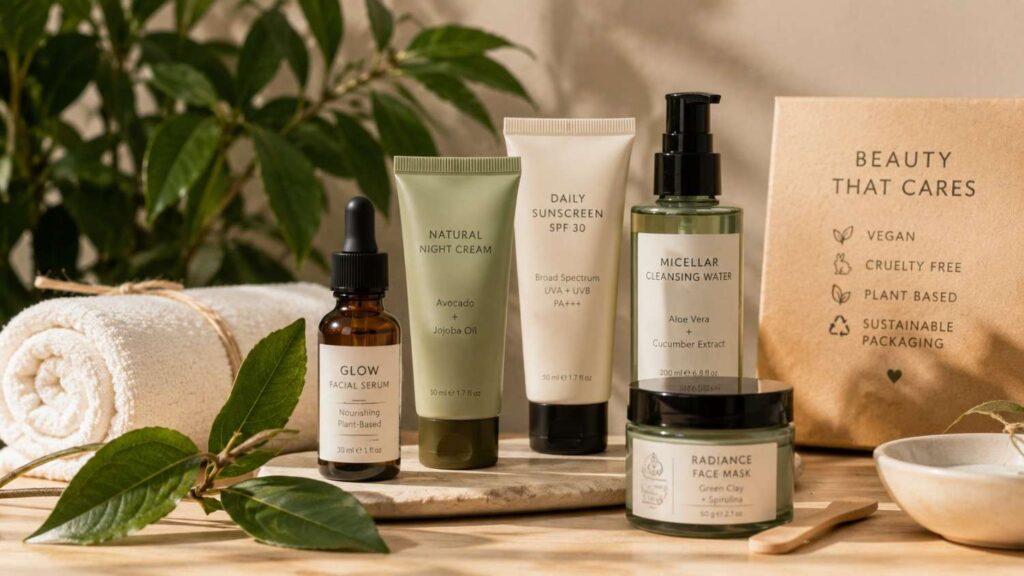
Top 5 Vegan Beauty Products You Need to Try
Creating a more ethical beauty routine no longer means accepting limited shades, weak performance, or difficult-to-find formulas. Today, vegan skincare, makeup, and haircare products are available across almost every major beauty category. Consumers can now find hydrating serums, complexion enhancers, high-performance eyeliners, volumizing mascaras, and strengthening hair treatments that are developed without animal-derived ingredients.
However, the growing popularity of plant-focused beauty marketing has also made shopping more confusing. Terms such as “natural,” “green,” “clean,” “botanical,” and “conscious” can sound ethical, but they do not automatically mean that a product is vegan or cruelty-free. A formula may feature plant extracts while still containing beeswax, lanolin, carmine, shellac, or another ingredient obtained from animals.
This guide to the top 5 vegan beauty products you need to try is designed to simplify the decision-making process. The products have been selected from different categories so the list can support a balanced routine rather than focusing only on makeup or skincare.
Each recommendation is based on the product’s stated vegan positioning, practical use, versatility, and suitability for everyday beauty routines. The products are not presented as universally perfect choices because skin types, hair textures, application preferences, allergies, and budgets vary considerably.
Use this guide as a starting point. Compare each product with the items already in your routine, check the latest ingredient list, and choose the option that solves a real need rather than purchasing something only because it is trending.
What Makes a Beauty Product Truly Vegan?
A beauty product is generally considered vegan when its formula does not contain ingredients, substances, or by-products obtained from animals. This may sound straightforward, but cosmetic ingredient lists are not always easy to interpret. Certain animal-derived ingredients can appear under scientific, traditional, or alternative names that are unfamiliar to everyday shoppers.
A vegan claim should therefore be evaluated alongside the product’s ingredient list, the brand’s official policy, and any relevant third-party certification. It is also necessary to separate vegan status from cruelty-free status because the terms refer to different parts of product development.
Understanding these distinctions can help consumers avoid misleading assumptions and make more informed purchasing decisions.
Vegan Beauty Versus Cruelty-Free Beauty
Vegan beauty and cruelty-free beauty are closely related concepts, but they are not interchangeable. The word “vegan” generally describes what a product contains. A vegan formula should not include animal-derived ingredients or animal by-products. The phrase “cruelty-free,” on the other hand, usually describes how a product or its ingredients were tested.
This distinction means that a cruelty-free product may still contain beeswax, honey, lanolin, carmine, collagen, silk protein, or another animal-derived ingredient. Similarly, a product may have a vegan ingredient list without offering a clear or independently verified policy concerning animal testing.
Consumers who want to create a strongly ethical beauty routine should therefore look for both claims. Ideally, the brand should clearly state that the individual product is vegan and that the company does not test its finished products or ingredients on animals.
It is also helpful to determine whether the claim applies to the entire brand or only to selected products. Some companies offer a mixture of vegan and non-vegan formulas, which means shoppers must verify each product individually.
According to PETA’s beauty guidance, cruelty-free claims relate to animal testing, while vegan claims relate to the absence of animal-derived ingredients. This separation is important because packaging may display one claim prominently while providing little information about the other.
Certifications and Ingredient Labels Matter
Third-party certifications can provide an additional level of confidence when evaluating vegan beauty products. Recognized certification programs usually require companies to provide information about ingredients, suppliers, manufacturing processes, and testing policies. While certification does not remove the need to review a product carefully, it can make verification easier.
The Vegan Society, for example, requires registered products to exclude animal ingredients and animal by-products. Its standards also address animal testing carried out by or on behalf of the company. Other certification programs may focus more specifically on cruelty-free testing policies.
Ingredient labels remain important even when a product carries a recognizable logo. Consumers should learn to identify commonly used animal-derived ingredients, including carmine, cochineal, beeswax, cera alba, shellac, lanolin, honey, collagen, guanine, silk protein, and some forms of keratin.
The source of an ingredient is not always obvious. Certain substances can be produced from either plant-based or animal-derived materials, and the ingredient list may not explain the origin. In these situations, a direct vegan statement from the manufacturer is more useful than guessing based on the ingredient name alone.
It is also worth checking product information regularly. Brands can reformulate products, change suppliers, adjust manufacturing locations, or update policies. A product that was confirmed vegan several years ago should still be reviewed before a new purchase.
| Animal-Derived Ingredient | Common Use in Beauty Products | Vegan Alternative |
|---|---|---|
| Beeswax (Cera Alba) | Lip balms, mascaras, creams | Candelilla wax, Carnauba wax |
| Lanolin | Moisturizers, lip products | Shea butter, Plant oils |
| Carmine | Red and pink pigments | Mineral pigments, Synthetic vegan colorants |
| Honey | Skincare and lip care | Agave extract, Plant glycerin |
| Animal Keratin | Hair treatments | Plant proteins, Amino acid blends |
| Collagen (Animal Source) | Anti-aging skincare | Vegan collagen alternatives, Peptides |
| Shellac | Nail polish, mascara | Synthetic film-forming agents |
| Guanine | Shimmer cosmetics | Mineral mica, Synthetic pearlescent pigments |
Best Vegan Skincare and Complexion Products
Skincare preparation and complexion makeup work closely together. A well-hydrated surface can help makeup apply more evenly, while the right complexion product can improve radiance without requiring a heavy layer of foundation. The first two recommendations in this guide support these related goals.
BYOMA Phyto-Mucin Glow Serum is intended for hydration and skin preparation, while e.l.f. Halo Glow Liquid Filter provides a luminous cosmetic finish. They can be used independently or combined as part of a simple vegan beauty routine.
When layering skincare and makeup, apply products from lighter to heavier textures and allow each layer to settle. This helps reduce pilling, patchiness, and excessive product buildup.
1. BYOMA Phyto-Mucin Glow Serum
BYOMA Phyto-Mucin Glow Serum is a lightweight vegan face serum created for people who want hydration, radiance, and a smoother-looking base beneath makeup. According to the brand, the formula has a non-sticky texture and can be used both as a skincare serum and as part of makeup preparation.
The product page highlights phytomucin, peptides, panthenol, and hyaluronic acid. These ingredients are commonly used in hydrating and conditioning formulas, although the final performance of any serum depends on the complete formulation rather than one highlighted ingredient.
BYOMA identifies the product as vegan, cruelty-free, fragrance-free, alcohol-free, and dermatologist tested. The fragrance-free positioning may appeal to shoppers who prefer to avoid added perfume in leave-on skincare products.
For practical application, use a small amount after cleansing. Gently spread the serum across the face and neck, then allow it to absorb before applying moisturizer or sunscreen. During a morning routine, sunscreen should remain the final skincare step before makeup.
People who already use several hydrating serums may not need to add another one. The product is most useful when it fills a clear gap, such as dehydration, tightness, or poor makeup preparation.
Anyone with persistent irritation, severe acne, eczema, or another diagnosed skin condition should treat this as a cosmetic product rather than a medical treatment and seek appropriate professional advice where needed.
2. e.l.f. Halo Glow Liquid Filter
e.l.f. Halo Glow Liquid Filter is a versatile complexion product designed to create a luminous, soft-focus appearance. Unlike a traditional full-coverage foundation, it can be used in several ways depending on the desired finish and level of makeup coverage.
The official e.l.f. product page states that Halo Glow Liquid Filter can be worn alone, underneath foundation, mixed with another complexion product, applied over makeup, or used selectively as a liquid highlighter. This flexibility makes it useful for beginners who are still learning which type of base they prefer.
The brand describes the formula as 100% vegan and cruelty-free. It is also available in multiple flexible shades, although consumers should check the current shade range and regional availability on the official product page.
For a natural everyday look, apply a thin layer to moisturized skin and blend with clean fingers, a damp sponge, or a complexion brush. For additional coverage, layer foundation over it or mix a small amount into your usual base. For targeted radiance, tap the product onto the cheekbones, bridge of the nose, or other high points of the face.
People with oily skin or a strong preference for matte makeup may find the finish too reflective when applied heavily. A smaller amount, strategic placement, and light powder through the T-zone can create a more balanced result without removing all luminosity.
Best Vegan Eye Makeup Products
Eye makeup is one of the most expressive parts of a beauty routine, but it can also be difficult to verify. Mascaras and eyeliners may contain waxes, pigments, conditioning agents, or applicator materials with origins that are not immediately clear from the packaging.
The two eye products in this guide serve different purposes. Pacifica Vegan Collagen Fluffy Lash Mascara focuses on softer volume and separation, while KVD Beauty Tattoo Liner is designed for controlled lines and precise definition.
Because the eye area is sensitive, application technique, hygiene, and removal are just as important as the formula itself. Never share eye makeup, avoid using products that have changed in texture or smell, and stop use if irritation develops.
3. Pacifica Vegan Collagen Fluffy Lash Mascara
Pacifica Vegan Collagen Fluffy Lash Mascara is designed for people who want lashes to appear fuller, softer, and more separated without creating an excessively stiff finish. The brand states that the formula uses plant-based fibers and vegan collagen to support visible length and volume.
Pacifica identifies the mascara as 100% vegan and cruelty-free. Its official product information also states that the formula is ophthalmologist tested and suitable for contact-lens wearers and sensitive eyes. These are manufacturer claims and do not guarantee that every individual will tolerate the product without irritation.
The mascara is packaged in a glass bottle, which the brand presents as a way to reduce the amount of plastic used in conventional mascara packaging. Shoppers interested in lower-waste beauty should still review local recycling guidance, as cosmetic packaging may require cleaning or specialized disposal.
For a natural daytime result, begin with one even coat from the base of the lashes to the tips. Use a gentle side-to-side motion at the roots, then pull the wand upward. For stronger volume, allow the first coat to set briefly before adding a second layer.
Avoid repeatedly pumping the wand in and out of the tube. This introduces air and may cause the formula to dry more quickly. Replace the mascara regularly, particularly if the consistency, scent, or performance begins to change.
4. KVD Beauty Tattoo Liner
KVD Beauty Tattoo Liner is a precision liquid eyeliner developed for fine definition, classic wings, and more dramatic graphic looks. Its flexible brush tip allows the line to change in thickness depending on the amount of pressure applied during application.
KVD Beauty describes the product as waterproof, transfer-resistant, smudge-resistant, vegan, and cruelty-free. The official product information also highlights a very fine precision tip and vegan brush fibers.
Beginners often find liquid eyeliner difficult because they attempt to draw one complete line in a single movement. A more controlled method is to use several short strokes. Rest your elbow on a stable surface, look slightly downward into a mirror, and begin near the center of the upper lash line. Move outward first, then use the remaining product on the brush to define the inner section.
For a wing, mark a small guide point in the direction of the end of the eyebrow, connect it to the lash line, and gradually build thickness. Creating the shape slowly is easier than trying to correct a thick line afterward.
Waterproof eyeliner should be removed gently with an eye-safe makeup remover. Hold a saturated pad against the closed eye for several seconds before wiping. This gives the remover time to loosen the formula and reduces the need for harsh rubbing around the delicate eye area.
Best Vegan Haircare Pick and Product Comparison
Vegan beauty extends beyond facial skincare and makeup. Haircare products may contain keratin, silk proteins, honey, beeswax, collagen, or other ingredients that can be obtained from animals. This makes clear labeling particularly important for shoppers trying to create a fully vegan routine.
The Aveda overnight serum included in this guide is intended for dry, weakened, or damaged-looking hair. It is followed by a practical comparison table that allows readers to review all five recommendations according to category, primary use, standout feature, and potential limitation.
No product will suit every person equally. Hair density, texture, porosity, styling habits, skin type, makeup preferences, and climate can all affect results.
5. Aveda Botanical Repair Strengthening Overnight Serum
Aveda Botanical Repair Strengthening Overnight Serum is a leave-in haircare product intended for people whose hair appears dry, weakened, or damaged from coloring, frequent heat styling, brushing, or environmental exposure.
Aveda states that its products are vegan and cruelty-free. The brand positions this particular serum as an overnight bond-building treatment designed to improve the appearance and feel of damaged hair while the user sleeps. It also makes claims concerning the visible appearance of split ends based on its own testing and product evaluation.
For application, begin with a small amount and distribute it mainly through the mid-lengths and ends. These areas are generally older and more vulnerable to dryness than the roots. Fine or easily weighed-down hair may require less product, while thick, coarse, or very dry hair may benefit from a slightly larger amount.
Comb through gently to distribute the serum, then leave it in overnight as directed. Avoid applying excessive product directly to the scalp unless the instructions specifically recommend doing so.
It is important to keep expectations realistic. Cosmetic hair treatments can improve softness, manageability, shine, and the visible appearance of damaged ends, but they cannot permanently repair a severely split strand. Once the hair fiber has physically separated, trimming is often the most reliable solution. The serum is therefore best viewed as a supportive maintenance product rather than a substitute for regular haircuts.
Top Five Product Comparison
The following comparison brings together the top 5 vegan beauty products you need to try and highlights the role each item can play in a practical routine. The table is intended to help readers compare categories rather than declare one product superior to all others.
| Product | Category | Best For | Standout Feature | Consider Before Buying |
|---|---|---|---|---|
| BYOMA Phyto-Mucin Glow Serum | Skincare | Hydration and makeup preparation | Lightweight, fragrance-free serum texture | May be unnecessary if you already use several hydrating serums |
| e.l.f. Halo Glow Liquid Filter | Complexion makeup | Dewy and soft-focus makeup | Can be worn alone, layered, mixed, or used as a highlighter | The luminous finish may not suit those seeking completely matte makeup |
| Pacifica Vegan Collagen Fluffy Lash Mascara | Eye makeup | Separated lashes and soft-looking volume | Buildable application with plant-based fibers | Eye sensitivity remains possible despite ophthalmologist testing |
| KVD Beauty Tattoo Liner | Eye makeup | Precise lines, wings, and detailed looks | Fine, pressure-responsive brush tip | Waterproof formulas require careful and thorough removal |
| Aveda Botanical Repair Overnight Serum | Haircare | Dry or damaged-looking lengths and ends | Leave-in overnight conditioning format | Heavy application may weigh down fine hair |
The best choice depends on the category that matters most in your routine. Someone who rarely wears eyeliner will gain more value from skincare or haircare, while a daily makeup user may prefer to start with mascara or a complexion product.
Product formulas, shades, packaging, claims, and availability may change. Always check the latest official product page and the label on the item you receive before purchasing or applying it.
How to Shop for Vegan Beauty Products Confidently
Shopping for vegan beauty products becomes easier when you follow a consistent verification process. A prominent plant image or environmentally themed package is not proof that a formula is vegan. Similarly, a cruelty-free logo does not automatically confirm that the product contains no animal-derived ingredients.
The most reliable approach is to combine label reading, official brand information, certification checks, and personal suitability. A product can meet vegan standards and still be unsuitable for your skin, hair, budget, or preferred finish.
The following steps help reduce confusion and encourage more intentional purchasing decisions.
Follow a Simple Verification Checklist
Begin by looking for an explicit vegan statement on the official product page or packaging. The word should apply to the individual product rather than appearing only within general brand marketing. Some companies sell both vegan and non-vegan formulas, so a brand-level claim may not be enough.
Next, review the company’s cruelty-free policy separately. Look for information about finished-product testing, ingredient testing, supplier requirements, and third-party testing. Independent certification can provide additional assurance, although not every small ethical brand has the resources to pursue formal certification.
Review the current ingredient list and watch for substances such as carmine, beeswax, lanolin, shellac, honey, silk protein, collagen, guanine, or animal-derived keratin. When the source of an ingredient is unclear, contact the manufacturer rather than relying on assumptions.
After confirming ethical claims, evaluate practical suitability. Consider skin type, hair texture, allergies, fragrance preferences, desired coverage, climate, and application habits.
Finally, purchase from the official brand or a reputable authorized retailer. This reduces the risk of receiving expired, counterfeit, improperly stored, or reformulated products that do not match the information you researched.
A complete verification process may take a few extra minutes, but it helps prevent impulse purchases and gives shoppers greater confidence in the products they choose.
Match the Product to Your Real Routine
A popular product is only useful when it solves a genuine need. Before buying anything, review your current routine and identify the category that requires improvement or replacement.
Choose BYOMA Phyto-Mucin Glow Serum if hydration and makeup preparation are your main concerns. Consider e.l.f. Halo Glow Liquid Filter if you want a flexible complexion product that can create radiance without relying on full-coverage foundation. Pacifica mascara may suit someone seeking softer-looking lash volume, while KVD Tattoo Liner is a better match for people who regularly create defined lines or wings. Aveda’s overnight serum is most relevant when dry or damaged-looking hair lengths need additional conditioning.
It is rarely necessary to replace an entire routine at once. Buying several unfamiliar formulas simultaneously can make it difficult to determine which product caused a positive result, irritation, breakouts, heaviness, or poor makeup wear.
A more effective approach is to introduce one product at a time. Use it consistently according to the directions and observe how it performs under normal conditions. Consider texture, application, wear time, removal, compatibility with other products, and value for money.
Advanced beauty users can also evaluate whether a new product duplicates an existing step. Two products may use different marketing language while serving the same practical function. Avoiding unnecessary duplication saves money and keeps the routine easier to maintain.
| Beauty Goal | Recommended Product | Why It Fits |
|---|---|---|
| Hydrated, glowing skin | BYOMA Phyto-Mucin Glow Serum | Lightweight hydration with a smooth makeup-ready finish |
| Natural radiant complexion | e.l.f. Halo Glow Liquid Filter | Multi-use formula for glow, highlighting, or mixing with foundation |
| Fuller everyday lashes | Pacifica Vegan Collagen Fluffy Lash Mascara | Adds soft volume while remaining suitable for sensitive eyes |
| Sharp, long-lasting eyeliner | KVD Beauty Tattoo Liner | Waterproof precision liner for detailed eye looks |
| Repair dry or damaged hair | Aveda Botanical Repair Overnight Serum | Overnight treatment that helps improve the appearance of damaged hair |
Vegan Does Not Automatically Mean Allergy-Free
The absence of animal-derived ingredients does not make a cosmetic automatically hypoallergenic, non-irritating, or suitable for sensitive skin. Plant extracts, essential oils, fragrances, preservatives, pigments, surfactants, and synthetic ingredients can all cause reactions in certain individuals.
The FDA advises consumers not to assume that terms such as “natural,” “organic,” or “hypoallergenic” guarantee that a product is safer or incapable of causing an adverse response. Similar caution should be applied to vegan labeling. Vegan status describes ingredient origin, not universal skin compatibility.
When introducing leave-on skincare, consider performing a small patch test according to professional or manufacturer guidance. Apply a limited amount to a discreet area and monitor for discomfort before using the product more widely. Patch testing does not guarantee that no reaction will occur, but it may help identify obvious sensitivity.
Eye products require additional hygiene. Do not share mascara or eyeliner, avoid adding water or other liquids to a drying formula, and discard products that develop an unusual smell, texture, or appearance. Stop using any cosmetic that causes persistent burning, swelling, severe itching, or worsening irritation.
People with diagnosed allergies or ongoing skin conditions should review ingredient lists carefully and seek professional guidance when necessary. Ethical positioning is valuable, but personal safety and product suitability must remain central to every beauty decision.
Quick Answer About Top 5 Vegan Beauty Products You Need to Try
The top 5 vegan beauty products you need to try are BYOMA Phyto-Mucin Glow Serum, e.l.f. Halo Glow Liquid Filter, Pacifica Vegan Collagen Fluffy Lash Mascara, KVD Beauty Tattoo Liner, and Aveda Botanical Repair Strengthening Overnight Serum. These selections cover several important parts of a complete beauty routine, including facial skincare, complexion makeup, mascara, liquid eyeliner, and overnight haircare.
Each product has been selected for a specific practical purpose rather than simply because it is popular. BYOMA supports hydration and makeup preparation, while e.l.f. offers a flexible way to create a luminous complexion. Pacifica focuses on soft lash volume, KVD Beauty provides precise eye definition, and Aveda is designed to improve the appearance and manageability of dry or damaged-looking hair.
The best product for you depends on your current routine, preferred finish, skin or hair needs, and budget. You do not need to buy all five items at the same time. A better approach is to replace one frequently used conventional product with a verified vegan option, test how it performs, and gradually build a more intentional routine.
It is also important to check both vegan and cruelty-free claims. Vegan generally refers to ingredients, while cruelty-free refers to animal-testing practices. Product formulas and company policies can change, so reviewing the latest official product information before purchasing remains an important final step.
Frequently Asked Questions
Consumers often have questions about the meaning, performance, safety, and reliability of vegan cosmetics. These concerns are reasonable because product labels can be inconsistent, ingredient names can be difficult to understand, and ethical claims do not always provide the complete picture.
The following answers address common People Also Ask-style searches and help readers make informed decisions when evaluating the top 5 vegan beauty products you need to try or any other vegan skincare, makeup, or haircare product.
What Makes a Beauty Product Vegan?
A beauty product is generally considered vegan when it does not contain ingredients or by-products obtained from animals. This means the formula should exclude substances such as beeswax, lanolin, carmine, shellac, honey, collagen, silk protein, and animal-derived keratin.
However, identifying a vegan product involves more than scanning for a few familiar ingredients. Certain substances can have either plant-based, synthetic, or animal-derived origins. The ingredient name alone may not explain which source was used.
The most reliable approach is to look for a clear vegan statement from the manufacturer, review recognized third-party certification where available, and check the current ingredient list. If the information remains unclear, contact the company directly.
It is also important to confirm whether the vegan claim applies to the individual product or the entire brand. Some companies offer both vegan and non-vegan products.
Finally, remember that vegan describes ingredients. It does not automatically confirm that the company follows a cruelty-free testing policy. Consumers seeking both standards should verify the product’s ingredients and the brand’s approach to animal testing separately.
Is Vegan Beauty the Same as Cruelty-Free Beauty?
No, vegan beauty and cruelty-free beauty refer to different issues. Vegan generally means that the product contains no animal-derived ingredients or animal by-products. Cruelty-free generally means that the product and its ingredients were not tested on animals according to the company’s stated policy or certification requirements.
A product can therefore be cruelty-free while still containing beeswax, lanolin, honey, carmine, or another animal-derived ingredient. In the same way, a formula may contain no animal ingredients but lack a clear or independently verified cruelty-free testing policy.
For shoppers who want both standards, the best approach is to search for separate vegan and cruelty-free statements. Do not assume that one claim automatically includes the other.
Third-party certifications may help, but shoppers should still review what each certification covers. Some programs focus on ingredient origin, while others focus on animal testing.
Product-level verification is also important. A brand may describe itself as cruelty-free while only some of its formulas are vegan. Reading the official product page, reviewing the latest packaging, and checking the company’s policy can provide a more complete and reliable answer.
Are Vegan Beauty Products Better for Sensitive Skin?
Vegan beauty products are not automatically better for sensitive skin. A vegan formula excludes animal-derived ingredients, but it may still contain fragrances, essential oils, preservatives, botanical extracts, pigments, or active ingredients that can cause discomfort or irritation.
Sensitive skin varies considerably from one person to another. One individual may react to fragrance, while another may be sensitive to a specific preservative, plant extract, exfoliating acid, or pigment. The fact that an ingredient is plant-based does not guarantee that it will be gentle.
When shopping for sensitive skin, look beyond the vegan label. Review the complete ingredient list and consider additional features such as fragrance-free positioning, dermatologist testing, ophthalmologist testing, and suitability statements. These claims can provide useful context, although they do not guarantee that every user will tolerate the product.
Introduce new products gradually and avoid starting several formulas at the same time. This makes it easier to identify the cause of any irritation.
People with diagnosed allergies, eczema, rosacea, or another ongoing skin condition should seek professional advice where necessary. Vegan certification can support ethical shopping, but personal tolerance and medical needs must still guide the final decision.
Can Vegan Makeup Perform as Well as Conventional Makeup?
Yes, vegan makeup can perform as well as conventional makeup. Modern formulations can provide strong pigmentation, smooth blending, waterproof wear, buildable coverage, lash volume, precise application, and a wide range of finishes.
The performance of a cosmetic depends on the complete formula, including pigments, film-forming agents, waxes, emollients, powders, preservatives, and applicator design. Removing animal-derived ingredients does not prevent a brand from creating an effective formula because plant-based and synthetic alternatives are widely available.
The products in this guide demonstrate different forms of performance. e.l.f. Halo Glow Liquid Filter offers flexible complexion application, Pacifica mascara focuses on buildable lash volume, and KVD Tattoo Liner is designed for precision and long-wearing definition.
However, vegan status should not be treated as proof that a product will suit everyone. A highly pigmented eyeliner may still be difficult for a beginner, and a luminous complexion product may not appeal to someone who prefers a matte finish.
Compare products according to your personal priorities, including texture, wear, shade availability, ease of removal, packaging, price, and compatibility with other products in your routine.
Which Product Should a Vegan Beauty Beginner Try First?
A beginner should start with the product category they already use most often. Replacing a familiar item is easier than adding an entirely new step to the routine.
Someone who regularly uses facial serum may begin with BYOMA Phyto-Mucin Glow Serum. A person who wears light complexion makeup could consider e.l.f. Halo Glow Liquid Filter. Pacifica mascara may provide a simple entry point for everyday eye makeup, while KVD Tattoo Liner is better suited to someone who already enjoys defined eyeliner looks. Aveda’s overnight serum is relevant for people focused on dry or damaged-looking hair.
The top 5 vegan beauty products you need to try do not need to be purchased together. Introducing one product at a time is more practical and allows you to assess its texture, performance, compatibility, and value.
Choose a product that addresses a specific problem or replaces something that is nearly finished. This helps reduce waste and prevents unnecessary spending.
Before buying, check the latest vegan and cruelty-free claims, review the ingredient list, and consider whether the finish or application method suits your preferences. A successful first vegan purchase should feel useful, easy to integrate, and realistic to repurchase.
How Can I Check Whether a Product Is Still Vegan?
Start by visiting the official product page and looking for a current vegan statement. Avoid relying entirely on old blog posts, social media comments, or outdated product reviews because formulas and company policies can change.
Next, check the packaging and ingredient list on the exact product being purchased. Regional formulas may occasionally differ, and older stock may not match the newest online description.
Review whether the brand has a current vegan policy, cruelty-free policy, or recognized certification. Certification databases can provide useful supporting information, but shoppers should understand what each program verifies.
When an ingredient has an unclear source, contact the manufacturer and ask a specific question. Instead of asking only whether the product is “ethical,” ask whether the current formula contains any animal-derived ingredients or animal by-products.
It can also be helpful to ask whether the company, its suppliers, or third parties conduct animal testing on the finished product or its ingredients.
Save screenshots or written responses when purchasing products that are difficult to verify. This creates a reference for future shopping.
Because product information can change, repeat the verification process when a formula is reformulated, repackaged, renamed, or relaunched.
Conclusion
Building a vegan beauty routine does not require replacing every skincare, makeup, and haircare product immediately. A gradual approach is usually more affordable, less wasteful, and easier to evaluate.
The five products discussed in this guide serve different purposes. BYOMA supports hydration and preparation, e.l.f. adds flexible radiance, Pacifica creates softer lash volume, KVD Beauty provides precise eye definition, and Aveda offers overnight care for dry or damaged-looking hair.
The best choice is the product that fits naturally into your routine and addresses a genuine need.
The Best Place to Start
The most practical starting point is the product category you use consistently. If skincare preparation affects how your makeup applies, BYOMA Phyto-Mucin Glow Serum may be the most relevant option. If you prefer lightweight, luminous makeup, e.l.f. Halo Glow Liquid Filter offers several application methods within one product.
Pacifica Vegan Collagen Fluffy Lash Mascara may appeal to users who want everyday lash definition without an overly stiff appearance. KVD Beauty Tattoo Liner is better suited to people who value sharp lines, wings, and controlled application. For haircare-focused routines, Aveda Botanical Repair Strengthening Overnight Serum provides a leave-in option for dry or damaged-looking lengths and ends.
Avoid choosing a product only because it is receiving attention online. Consider how frequently you will use it, whether it duplicates something you already own, and whether the finish matches your preferences.
A successful vegan beauty purchase should be easy to integrate, comfortable to use, and effective enough to replace the conventional product it was intended to replace. Starting with one thoughtful choice also makes it easier to evaluate results before expanding the routine further.
Final Takeaway
The top 5 vegan beauty products you need to try demonstrate that ethical beauty can include practical performance, modern textures, flexible application, and products for several different parts of a routine.
However, no list can replace individual research. Vegan claims, cruelty-free policies, formulas, shades, packaging, and availability may change. Always review the current official product page and packaging before making a final purchase.
It is equally important to remember that vegan does not mean universally gentle, allergy-free, sustainable, or suitable for every person. Ethical claims should be considered alongside skin type, hair texture, sensitivity, application preferences, budget, packaging, and realistic product use.
Begin with one category that matters most, verify the product carefully, and introduce it gradually. This approach reduces waste and helps you create a routine based on products you genuinely use rather than products purchased only for their marketing appeal.
By combining ethical verification with practical decision-making, shoppers can build a more intentional beauty routine without sacrificing convenience or performance.
