
How to Choose Cruelty-Free Makeup Without Being Misled
Learning how to choose cruelty-free makeup can seem straightforward until you begin comparing labels. Many cosmetic products feature rabbits, leaves, natural colors, and reassuring phrases such as “kind to animals” or “not tested on animals.” Although these statements may reflect a genuine commitment, they do not always provide enough information to confirm how a product was developed, manufactured, or tested.
The difficulty comes from the fact that cruelty-free claims can have different meanings. One company may use the term only because it did not test the finished product. Another may maintain a detailed supplier-monitoring system that covers every ingredient, formulation, manufacturer, and third-party laboratory. Both products may display similar language, even though their verification standards are very different.
In the United States, the Food and Drug Administration explains that the phrases “cruelty-free” and “not tested on animals” do not have legally defined meanings for cosmetic labeling. A manufacturer may apply the claim to its finished product while relying on ingredients or safety information associated with animal testing elsewhere in the supply chain.
For shoppers, this means packaging should be treated as a starting point rather than final proof. A trustworthy decision requires three layers of research: independent certification, a transparent animal testing policy, and careful evaluation of the individual product.
In my experience, the process becomes much easier once you use the same checklist for every purchase. Instead of trying to memorize hundreds of company names, you can verify each brand in an official directory, examine what its commitments actually cover, and then choose the formula that works best for your needs.
The following guide explains each step in detail. It also clarifies the difference between cruelty-free and vegan makeup, compares well-known certification systems, addresses international sales, and highlights common shopping mistakes. Whether you are replacing one mascara or rebuilding an entire makeup collection, these principles can help you shop with greater confidence.
| Certification / Organization | What It Verifies | Best For | Extra Notes |
|---|---|---|---|
| Leaping Bunny | Brand-wide cruelty-free policy, supplier monitoring, fixed cut-off date, independent audits | Shoppers looking for the strictest cruelty-free certification | Verify the brand through the official directory. |
| Cruelty Free International | Animal-testing policy with supply-chain verification and independent approval process | Consumers seeking internationally recognized certification | Certification covers more than packaging claims. |
| PETA Beauty Without Bunnies | Company declaration that it and its suppliers do not conduct or commission animal testing | Quick brand verification | Always review the company’s current testing policy for complete transparency. |
| The Vegan Society | Confirms products meet vegan standards and avoid animal-derived ingredients | Buyers wanting both vegan and cruelty-free products | Vegan certification is different from cruelty-free certification. |
What Does Cruelty-Free Makeup Actually Mean?
Cruelty-free makeup generally refers to cosmetic products developed without new animal testing by the brand or by another organization acting on its behalf. However, this broad definition does not tell the whole story. The strength of a cruelty-free claim depends on which parts of the product-development process it covers and how the company verifies compliance throughout its supply chain.
A comprehensive policy should address far more than the final lipstick, foundation, or mascara sold to the customer. Cosmetic products contain multiple ingredients sourced from different suppliers, and those suppliers may obtain materials from additional companies. Formulas can also be manufactured or tested by external contractors. Unless a brand monitors these relationships, it may not have complete visibility into how every component was evaluated.
This is why certification standards often focus on ingredients, formulations, raw material suppliers, manufacturers, third-party laboratories, and testing commissioned or financed by the company. Some programs also require businesses to establish a fixed cut-off date after which they will not accept newly animal-tested ingredients for cosmetic purposes.
It is equally important to separate cruelty-free claims from other beauty terms. “Natural,” “clean,” “organic,” “sustainable,” and “vegan” describe different characteristics. None should be treated as an automatic substitute for a verified animal testing policy.
For beginners, the easiest interpretation is that cruelty-free describes a process rather than a product benefit. It does not tell you whether the makeup is safer, gentler, environmentally preferable, vegan, or appropriate for sensitive skin. Advanced shoppers should look beyond the headline claim and examine how the company controls its suppliers, documents compliance, and responds to regulatory testing requirements.
Understanding these distinctions creates a stronger foundation for every later purchasing decision.
Cruelty-Free Usually Refers to Testing, Not Ingredients
Cruelty-free and vegan are closely related ethical beauty terms, but they answer different questions. A cruelty-free claim concerns whether animal testing was involved in developing or producing a cosmetic. A vegan claim concerns whether the formula contains ingredients, by-products, or processing materials derived from animals. Because these standards address separate issues, a product can meet one without meeting the other.
A cruelty-free lipstick, for example, may still contain beeswax, lanolin, carmine, shellac, honey derivatives, or other animal-derived materials. These ingredients do not necessarily indicate that the product was tested on animals, but they prevent it from meeting a strict vegan standard. Conversely, a formula may contain no animal ingredients while being sold by a company that has not demonstrated a complete cruelty-free testing policy.
Shoppers who want both standards should verify each claim independently. Look for the company in an established cruelty-free database, then review the ingredient information or check for a credible vegan certification. Do not assume that a rabbit symbol guarantees a vegan formula or that a leaf-shaped vegan logo confirms the absence of animal testing.
This distinction also improves search accuracy. When comparing vegan and cruelty-free makeup, identify whether your main concern is testing, ingredients, or both. A clear personal standard will make product research faster and reduce the risk of purchasing something that conflicts with your values.
A Finished-Product Claim May Not Cover the Supply Chain
A statement such as “finished product not tested on animals” may be technically accurate while providing limited information about the product’s development. The phrase usually indicates that the completed cosmetic was not subjected to animal testing by the brand. It may not address how individual ingredients were tested, whether suppliers commissioned animal studies, or whether an outside laboratory performed testing for another regulatory purpose.
Cosmetic supply chains can be complex. One foundation may contain ingredients sourced from numerous raw material suppliers, each with its own policies and documentation. The brand may also use contract manufacturers, formulation specialists, or external safety laboratories. Unless the company requires written commitments and monitors these partners, a finished-product statement cannot provide complete assurance.
This is why stronger certification programs examine more than the item placed on a store shelf. They may require supplier declarations, ongoing monitoring, a fixed cut-off date, annual recommitment, or independent auditing. These measures help create a documented system rather than relying entirely on a public-facing promise.
When reading an animal testing policy, look for direct references to ingredients, formulations, suppliers, manufacturers, third parties, and testing conducted where required by law. The more specific the language, the easier it is to evaluate.
A narrow claim is not automatically false, but it should not be interpreted more broadly than the wording allows. Shoppers should always ask what part of the supply chain the statement actually covers.
How to Choose Cruelty-Free Makeup Step by Step
A consistent verification process is the best way to remove uncertainty from cruelty-free shopping. Rather than deciding based on packaging, advertising, or social media recommendations, use the same sequence of checks for every brand. This approach works whether you are buying from a major international company, a small independent label, an online marketplace, or a local beauty retailer.
Begin with the company rather than the individual product. Cruelty-free status is often established at brand or corporate level because testing policies affect ingredients, formulations, suppliers, and manufacturing practices across multiple products. Searching only for one lipstick or concealer may produce incomplete or outdated information.
Next, confirm that the company appears in a recognized database. Certification organizations and cruelty-free directories regularly publish searchable lists of approved or verified businesses. These resources are more useful than an unsupported claim because they explain their standards and usually maintain direct relationships with participating companies.
After finding a listing, compare it with the brand’s own policy. The company website should provide clear, current language that supports the certification. Differences, vague exceptions, or outdated information deserve closer examination.
You should then decide whether additional criteria matter to you. Some shoppers require vegan formulas, avoid brands owned by non-cruelty-free parent companies, or prefer products with environmental certifications. These are valid preferences, but they should be treated as separate filters.
Finally, assess the individual product. Ethical verification does not replace normal beauty research. The formula still needs to suit your complexion, skin type, sensitivities, budget, and performance expectations.
The following three steps provide a practical framework you can save, repeat, and adapt as brands or regulations change.
Step 1 — Search an Official Certification Database
Your first step should be to search the exact brand name in an official cruelty-free database. Reliable starting points include the Leaping Bunny Shopping Guide, Cruelty Free International’s approved-brand directory, and PETA’s Ultimate Cruelty-Free List. These resources help you move beyond marketing language and identify companies that have completed a formal verification or declaration process.
Enter the brand name carefully and check for similar names. Some parent companies own multiple cosmetic labels, while other businesses operate different brands in separate countries. Confirm that the listing corresponds to the product you plan to purchase rather than assuming an affiliated company has the same status.
Review the information provided with the result. A directory may indicate whether the company is certified, approved, vegan, owned by another corporation, or available in specific markets. It may also link to the company’s profile, product categories, or official website.
If a brand does not appear, do not immediately conclude that it conducts animal testing. It may be uncertified, newly launched, listed under another name, or still completing an application. However, the absence of independent verification means you will need stronger evidence from the company itself.
Bookmarking these official databases can make future purchases easier. Instead of relying on memory or an old screenshot, perform a new search whenever you shop. Current verification is especially important after corporate acquisitions, policy updates, market expansion, or major changes in product distribution.
Step 2 — Confirm That the Listing Matches the Brand
Finding a familiar name in a cruelty-free directory is encouraging, but you should confirm that the listing applies to the correct business. Beauty companies often use complex ownership structures, regional subsidiaries, licensed product lines, and similarly named brands. A small mismatch can lead to an incorrect conclusion about a product’s status.
Start by comparing the official website linked in the directory with the website printed on the packaging or retailer page. Check the brand logo, company description, and product category. If the certification profile includes a parent company, note whether your ethical standard allows you to purchase from certified subsidiaries owned by corporations with different policies.
You should also determine whether the approval covers the entire brand or a limited product range. Most major cruelty-free programs certify companies or brands rather than individual shades, but some vegan, organic, or ingredient-related marks may apply only to specific products. Never extend a product-level certification to an entire company without confirmation.
Packaging dates can create additional confusion. Retailers may continue selling older stock after a brand changes its logo, ownership, formulation, or certification status. The reverse can also happen: a newly certified company may have products in circulation without the updated mark.
For these reasons, the online directory should take priority over appearance alone. Use the logo as a prompt to investigate, then verify the exact company in the certifier’s current records. This small step prevents many of the most common cruelty-free shopping errors.
Step 3 — Read the Brand’s Full Animal Testing Policy
After confirming a directory listing, read the brand’s full animal testing policy. Certification provides valuable reassurance, but the company’s own explanation can reveal how it communicates its standards, handles exceptions, and responds to regulatory requirements. A detailed policy also helps you identify whether the brand addresses the entire supply chain or only the finished product.
Look for clear statements covering ingredients, formulations, suppliers, manufacturers, contract laboratories, and testing performed by third parties. The policy should explain whether the brand conducts, commissions, finances, or permits animal testing. It should also clarify what happens when authorities request or require additional safety data.
Be cautious with statements that rely on broad values without operational details. Phrases such as “we love animals,” “we support alternatives,” or “we do not personally test” may express a positive position without confirming supplier compliance. Similarly, “except where required by law” introduces an exception that deserves further investigation.
If the information remains unclear, contact the company. Ask whether its suppliers test ingredients on animals, whether outside laboratories can perform testing on its behalf, and whether the policy applies in every market. Request a direct written response rather than relying on a customer-service script that repeats the website.
Transparent cruelty-free makeup brands should be able to explain their practices clearly. Complicated supply chains may require detailed answers, but ambiguity should not be treated as proof. When evidence is incomplete, choose a better-documented alternative.
Step-by-Step Guide to Choosing a Product
| Buying Factor | Why It Matters | What to Check |
|---|---|---|
| Cruelty-Free Certification | Confirms the brand follows recognized animal-testing standards | Look for verified certification and official directory listing. |
| Animal Testing Policy | Explains the company’s complete testing practices | Check whether ingredients, finished products, suppliers, manufacturers, and third parties are included. |
| Vegan Status | Ensures no animal-derived ingredients are used | Review ingredient lists or look for a trusted vegan certification. |
| Product Performance | Ethical products should also meet your beauty needs | Compare finish, coverage, wear time, and shade range. |
| Skin Compatibility | Prevents irritation and improves user experience | Check ingredients, fragrance, and skin-type recommendations. |
| Price & Availability | Helps maintain a practical cruelty-free routine | Compare value, refill options, and local availability before buying. |
Which Cruelty-Free Certifications Can You Trust?
Cruelty-free certifications are valuable because they establish a structured process for evaluating company claims. Instead of asking shoppers to investigate every supplier and testing arrangement independently, certification organizations define standards, collect documentation, and maintain public lists of participating businesses. However, no two programs are identical, and understanding their differences helps you interpret each logo accurately.
A strong program should explain what is prohibited, which companies or products are eligible, how suppliers are assessed, and whether compliance is reviewed over time. Some organizations require a fixed cut-off date for animal testing, while others focus on company and supplier declarations. Certain programs include independent audits, annual recommitment, or market-specific rules.
Certification does not eliminate the need for judgment. A company may be certified cruelty-free but not vegan. It may also be owned by a parent corporation with different practices. In other cases, a business may follow a credible cruelty-free policy without displaying a logo because participation can involve licensing, documentation, or administrative costs.
The most practical strategy is to use respected certification databases as your first verification layer and the brand’s current policy as your second. Avoid ranking certifications solely by logo recognition. A familiar symbol is useful only when it represents an official, current listing.
You should also distinguish registered certification marks from decorative rabbit illustrations. Brands and packaging designers can use animal imagery for many reasons. Unless the symbol belongs to a named program and the company appears in that program’s database, it should not be treated as independent proof.
The comparison below highlights the main role of several widely recognized verification systems.
Cruelty-Free Certification Comparison
| Verification Method | What It Generally Checks | Main Shopping Benefit | Important Consideration |
|---|---|---|---|
| Leaping Bunny | Company policies, ingredients, suppliers, supply-chain monitoring, recommitment, and possible audits | Strong emphasis on supply-chain assurance | Confirm the exact brand in the official directory |
| Cruelty Free International | Approved brands supported by supply-chain controls and auditing requirements | Internationally recognized approval framework | Availability and program details may vary by region |
| PETA Ultimate Cruelty-Free List | Company commitments involving ingredients, formulations, suppliers, and finished products | Large searchable database with vegan distinctions | Review whether the company is listed as animal test-free or animal test-free and vegan |
| Vegan Trademark | Animal-derived ingredients, production processes, and relevant testing standards | Useful for shoppers who want vegan product verification | Vegan certification and cruelty-free certification are related but not always identical |
| Brand’s own statement | Information the company chooses to publish | Can provide useful context and policy details | Self-declared claims are not the same as independent verification |
The table shows why shoppers should not treat every label as equivalent. Leaping Bunny and Cruelty Free International place significant attention on supply-chain controls. PETA offers a large, accessible company database and distinguishes between companies that are animal test-free and those that are both animal test-free and vegan.
The Vegan Trademark adds a different layer by addressing animal-derived materials and related production requirements. It is particularly useful when ingredient origin matters as much as testing.
A brand statement can still be informative, especially when it includes supplier requirements and regulatory details. However, it provides less external assurance than a recognized third-party process.
Verify the Logo Instead of Trusting Its Appearance
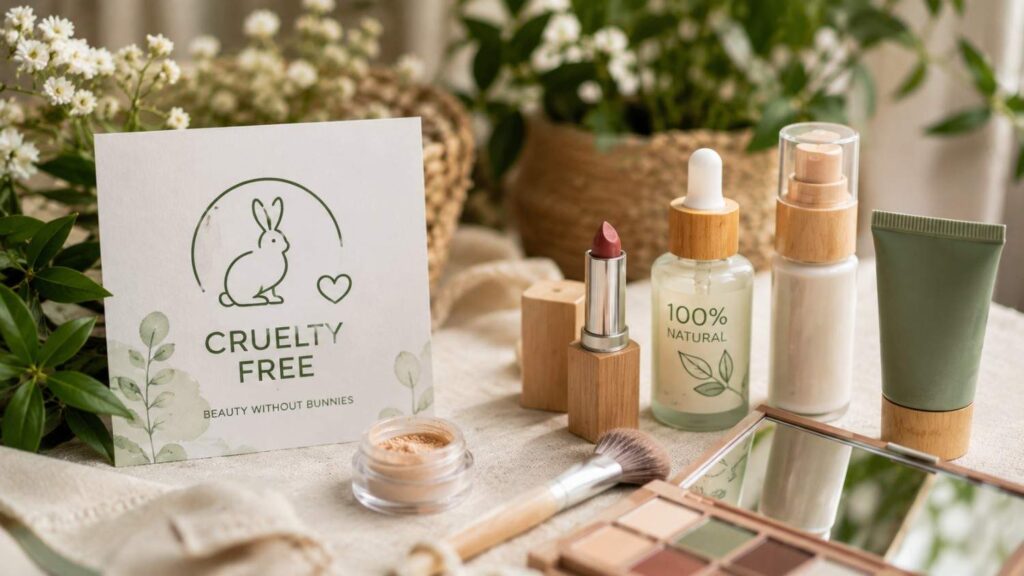
A rabbit symbol can be helpful, but its appearance alone does not prove that a product has passed an independent cruelty-free standard. Some brands use decorative animals, heart-shaped rabbits, or custom “cruelty-free” icons that resemble established certification marks. These graphics may communicate the company’s position, but they should not be confused with registered logos.
Begin by identifying the organization named beside or beneath the symbol. Official marks typically include recognizable wording, a trademark design, or a reference to the certifying body. Once you identify the program, search the company in its current online directory. Do not assume the logo is valid simply because it appears professionally printed.
Verification is also important because packaging can become outdated. A company may change certification status, ownership, policy, or product distribution while older inventory remains available. Conversely, newly approved brands may still sell packaging created before certification.
Retailer descriptions can also contain errors. Online marketplaces may reuse old images, copy inaccurate product details, or allow third-party sellers to create listings. The official certification database is more reliable than a retailer badge.
When you cannot verify a logo, treat it as a company claim rather than external proof. Read the animal testing policy, contact the brand, and compare its answers with recognized standards.
This habit requires little time but greatly improves purchasing accuracy. The question is not whether the bunny looks official; it is whether a named, accountable organization confirms the brand’s current status.
Understand What Vegan Certification Adds
Vegan certification addresses a different part of ethical beauty than cruelty-free verification. Its main purpose is to confirm that a product does not contain animal-derived ingredients, animal by-products, or certain materials associated with animal processing. Depending on the certifier, the standard may also cover manufacturing aids, production controls, cross-contamination procedures, and animal-testing requirements.
This additional layer matters because many familiar cosmetic ingredients can be animal-derived. Carmine is traditionally produced from insects and is commonly used as a red or pink pigment. Beeswax can appear in lip products and mascaras, while lanolin may be used for its emollient properties. Shellac, honey derivatives, collagen, keratin, and certain fatty acids may also require investigation.
A cruelty-free certification does not necessarily exclude these materials. Similarly, the word “vegan” on a package may describe only the ingredient list and provide limited information about the company’s broader testing policy. Shoppers who want both protections should look for separate, credible evidence.
The Vegan Society’s Vegan Trademark is one recognized example of product-level vegan verification. Other organizations and retailers may use their own criteria, so reviewing the official standard remains important.
Vegan certification can also simplify ingredient research for beginners. Instead of trying to identify every scientific name, shoppers can use the certification as an additional filter. Advanced readers should still consider manufacturing, sourcing, environmental impact, and corporate transparency if those issues are part of their broader ethical standard.
How Should You Read Labels and Brand Claims?
Cosmetic packaging contains useful information, but it is designed primarily to communicate product benefits and support sales. Cruelty-free shoppers should therefore read labels critically. A claim can be accurate within a narrow definition while still leaving important questions unanswered about ingredients, suppliers, international markets, or third-party testing.
Start by separating factual statements from emotional marketing. “No animal testing conducted by our company” is a specific claim, although it may be limited. “Beauty without cruelty” is a values statement that requires further explanation. Words such as “clean,” “conscious,” “ethical,” and “responsible” can support a brand identity without confirming a recognized testing standard.
Next, look for qualifying language. Small phrases such as “on finished products,” “where prohibited,” or “except where required by law” can materially change the meaning of a claim. Read the complete sentence rather than focusing on the boldest words.
Ingredient labels also need context. A list can help vegan shoppers identify certain animal-derived materials, but it cannot prove whether the ingredients or finished formula were tested on animals. Testing practices usually need to be verified at company level.
Country-of-origin and market information should also be interpreted carefully. Global cosmetic regulation changes over time, and simplified rules about where a brand manufactures or sells can become outdated. Current certification is usually more informative than assumptions based on geography.
Finally, remember that packaging space is limited. A trustworthy company may provide only a short statement on the product and publish detailed documentation online. The goal is not to reject every concise claim, but to follow it to a clearer source.
The next sections explain how to evaluate common wording, international sales, and parent-company ownership without relying on oversimplified rules.
Watch for Vague or Incomplete Wording
Vague wording is one of the most common challenges in cruelty-free shopping. Statements such as “kind to animals,” “we care about animal welfare,” or “we believe cosmetics should not be tested on animals” express values but do not describe the company’s operating practices. A business can oppose animal testing in principle while still using suppliers or regulatory pathways connected to it.
More specific wording can also be incomplete. “We do not test finished products on animals” does not explain whether ingredients, formulations, or supplier materials were tested. “We do not conduct animal testing” may exclude tests performed by contract laboratories or government authorities. “We support alternative methods” does not confirm that animal testing is prohibited.
When evaluating a policy, look for active and comprehensive language. The company should state whether it conducts, commissions, finances, or permits animal testing. It should mention ingredients, formulations, finished products, suppliers, manufacturers, and third parties. The strongest explanations also describe monitoring procedures or certification status.
Qualifying phrases deserve particular attention. “Unless required by law” or “except when requested by regulatory authorities” may create exceptions that affect your decision. Do not assume what these exceptions mean; investigate the company’s current markets and certification.
A vague statement is not proof of misconduct, but it is weak evidence. When two products perform similarly, choosing the brand with clearer documentation is reasonable. Transparency is part of ethical accountability, and shoppers should not have to interpret carefully crafted ambiguity to understand a company’s basic testing policy.
Do Not Use International Sales as a Simple Shortcut
For many years, cruelty-free shoppers were advised to reject any beauty brand selling through physical retail channels in mainland China. That shortcut developed from regulatory requirements that could involve animal testing for certain imported cosmetics. However, the regulatory environment has changed, and the issue is now more complicated than a simple yes-or-no rule.
Some qualifying general cosmetics may enter the market through pathways that do not require pre-market animal testing when brands provide appropriate documentation and meet applicable conditions. Certification organizations have also developed programs intended to help approved companies navigate Chinese distribution while maintaining cruelty-free requirements.
Nevertheless, this does not mean that every brand selling in mainland China is automatically cruelty-free. Product category, import route, local manufacturing arrangements, documentation, regulatory classification, and post-market enforcement can all matter. Different products from the same company may also be subject to different requirements.
The safest approach is to verify the brand’s current status through a recognized certification program that specifically addresses its market presence. Read the organization’s explanation of how the company qualifies rather than relying on an old article or social media list.
Location alone is no longer a dependable shortcut. A brand should not be rejected merely because it sells in China, nor should it be accepted without verification.
This principle applies to other international markets as well. Cosmetic laws evolve, and simplified country-based assumptions can become inaccurate. Current, documented certification provides stronger guidance than rules based on outdated regulatory conditions.
Decide How You View Parent Companies
Corporate ownership creates one of the most personal decisions in cruelty-free shopping. A beauty brand may be independently certified while being owned by a larger corporation whose other subsidiaries follow different animal-testing policies. The certified brand’s own products and suppliers may comply with the program, yet some shoppers remain uncomfortable supporting the parent company through their purchase.
There are two common perspectives. Some consumers buy from the certified subsidiary because they want to reward demand for cruelty-free products within large corporations. They believe strong sales can demonstrate that verified ethical standards are commercially valuable and encourage broader change.
Other shoppers avoid the entire corporate group. They prefer their money to support businesses whose parent companies and related brands follow consistent policies. This approach reflects a wider corporate-responsibility standard rather than focusing only on the individual product.
Neither position changes the technical certification status of the subsidiary. The decision depends on your personal priorities and how broadly you define ethical purchasing.
To make a consistent choice, research ownership before shopping and create a rule you can apply across brands. Certification directories and company profiles may identify parent corporations, but acquisitions can occur quickly, so review recent information.
Avoid judging other shoppers for setting a different boundary. Cruelty-free purchasing is already complex, and reasonable consumers may weigh direct product compliance, corporate influence, affordability, and accessibility differently. The most useful approach is to understand the relationship clearly and make an informed decision rather than purchasing under a false assumption of independence.
How Can You Choose the Right Product for Your Needs?
Cruelty-free verification confirms an ethical standard, but it does not guarantee that a makeup product will suit your skin, lifestyle, or expectations. A responsible purchase should satisfy both values-based and practical criteria. Buying a certified product that irritates your skin, provides the wrong shade, or performs poorly can lead to waste and unnecessary expense.
Begin by identifying what you need the product to do. A foundation purchase may require careful attention to coverage, finish, undertone, oxidation, wear time, and compatibility with sunscreen. Mascara may need to address volume, sensitivity, smudging, removal, or contact-lens use. Lip products can vary significantly in texture, pigmentation, transfer resistance, and comfort.
Ingredient preferences should be treated separately from cruelty-free status. A verified product may contain fragrance, essential oils, silicones, preservatives, or potential allergens. These ingredients are not automatically harmful, but they may not suit every individual. Review the formula based on your own sensitivities and professional advice where appropriate.
Budget also matters. Ethical shopping should be sustainable for the buyer. You do not need to choose the most expensive product or replace an entire collection at once. Drugstore and mid-range cruelty-free makeup brands can provide strong performance, while luxury pricing does not guarantee better certification or suitability.
Shade accessibility, packaging, customer service, return policies, and product availability should also influence your decision. A brand may have an excellent testing policy but offer limited options for certain skin tones or needs.
The best product is therefore not simply the one with the strongest label. It is a verified option that performs well, fits your budget, suits your skin, and can realistically become part of your routine.
Check Formula, Skin Compatibility and Performance
Once you verify the brand’s cruelty-free status, evaluate the product with the same care you would apply to any cosmetic purchase. Start with your skin type and intended result. Dry skin may benefit from hydrating, flexible formulas, while oily skin may need stronger wear or shine control. Sensitive skin requires attention to fragrance, known allergens, and personal reaction history.
Shade selection is equally important. Foundation, concealer, blush, bronzer, and lip color can look different under natural light than they do on a screen or store display. Review undertones, customer photographs, shade descriptions, and retailer return policies. When possible, test the product safely before committing.
Performance claims should be matched to your routine. A long-wear formula may be useful for humid conditions or extended events but could require a stronger removal method. A lightweight product may feel comfortable while providing less coverage than expected. Waterproof mascara can reduce smudging but may not suit users who experience eye sensitivity.
Do not assume that cruelty-free means hypoallergenic, dermatologist-tested, natural, non-comedogenic, or safe for every skin condition. These are separate claims with their own limitations.
Customer reviews can provide context, but prioritize reviews from people with similar skin types, tones, climates, and expectations. One person’s ideal finish may be another person’s disappointment.
By combining ethical verification with formula research, you reduce unnecessary purchases and build a cruelty-free collection that is practical, comfortable, and enjoyable to use.
Compare Products Within Your Budget
Cruelty-free makeup is available at a wide range of prices, and an ethical routine does not require luxury spending. A higher price may reflect packaging, marketing, distribution, specialty ingredients, or brand positioning rather than stronger cruelty-free standards. Certification should be verified independently of cost.
Start by setting a realistic price range for each product category. You may be comfortable investing more in foundation because shade, finish, and wear are especially important, while preferring affordable options for eyeliner, brow gel, or lip color. There is no need to apply the same spending rule to every item.
Compare value rather than price alone. Consider product size, frequency of use, shelf life after opening, application efficiency, and the amount needed per use. A slightly more expensive concealer may offer better value if it requires less product and consistently replaces several unsuccessful purchases.
Look for samples, travel sizes, testers, introductory sets, and retailer promotions from verified cruelty-free makeup brands. These options allow you to evaluate performance without committing to a full-size purchase. However, avoid buying discounted products simply because they are inexpensive. Unused makeup still represents wasted money and materials.
Maintain a shortlist of products at different price points. This makes replacement easier when your preferred item is unavailable or outside your current budget.
Affordable cruelty-free makeup can perform extremely well. The goal is not to spend more for an ethical label, but to choose a verified product that delivers dependable results at a cost you can maintain over time.
Replace Products Gradually
Transitioning to a cruelty-free makeup routine does not require discarding every product you already own. Throwing away safe, usable cosmetics can create unnecessary waste and financial pressure. A gradual replacement strategy is usually more practical and allows you to research each new purchase carefully.
Begin by identifying the products you use most frequently. Mascara, concealer, foundation, brow products, and everyday lip colors often run out faster than occasional items such as glitter, special-event palettes, or bold pigments. Replace each product with a verified alternative when it expires, becomes unsafe, or is used up.
Create a simple inventory of your current collection. Record the product category, opening date, approximate replacement time, and potential cruelty-free alternatives. This prevents rushed purchases and helps you compare formulas before you need an immediate replacement.
You can prioritize according to personal values. Some shoppers replace products from companies with the least transparent policies first. Others focus on categories that contact sensitive areas, such as eye or lip products. Both approaches are reasonable.
Do not continue using expired makeup solely to avoid waste. Changes in smell, texture, color, or performance may indicate that a product should be discarded. Follow the period-after-opening guidance where available and use appropriate hygiene practices.
A gradual transition also gives you time to test new brands without disrupting your routine. Over several replacement cycles, your collection can become fully aligned with your standards while remaining financially and environmentally responsible.
What Common Cruelty-Free Shopping Mistakes Should You Avoid?
Most cruelty-free shopping mistakes occur when a consumer relies on one appealing clue instead of completing a full verification process. A rabbit symbol, natural-looking package, vegan claim, retailer badge, or social media recommendation may be useful, but none should automatically settle the question.
The first mistake is treating unrelated beauty terms as interchangeable. “Natural,” “organic,” “clean,” “green,” “sustainable,” and “vegan” can each describe a different feature. A natural formula may still lack cruelty-free verification, while a certified cruelty-free product may contain synthetic ingredients. Ethical beauty requires evaluating claims individually rather than assuming they come as a package.
Another mistake is using old information. Beauty companies are regularly acquired, certified, removed from lists, reformulated, or introduced into new markets. A blog post, video, or graphic created several years ago may have been accurate when published but no longer reflect current conditions.
Shoppers may also investigate only the individual product while ignoring company-wide policies. Animal-testing commitments often apply at brand level, and a single label cannot explain supplier monitoring, third-party testing, or regulatory exceptions.
Overcorrecting can create problems as well. Some people dispose of entire collections immediately, spend beyond their budget, or choose unsuitable products because the ethical claim becomes the only purchase criterion. A sustainable transition should account for product safety, waste, cost, and performance.
Finally, avoid expecting perfection from a single certification. Cruelty-free status does not automatically address vegan ingredients, labor standards, packaging waste, carbon emissions, sourcing, inclusivity, or parent-company policies.
Recognizing these limitations does not weaken cruelty-free shopping. It makes your decisions more accurate and helps you support brands based on documented practices rather than assumptions.
Assuming “Natural,” “Clean,” or “Organic” Means Cruelty-Free
Terms such as “natural,” “clean,” and “organic” are often presented alongside animal imagery, botanical illustrations, and sustainability messages. This visual combination can make a product appear cruelty-free even when the package provides no verified information about animal testing.
Natural generally suggests that some ingredients come from sources found in nature, although definitions and percentages can vary. Organic usually relates to how certain agricultural ingredients are grown and certified. Clean beauty is a broader marketing category that may focus on excluding selected ingredients. None of these concepts automatically addresses whether the brand, its suppliers, or third parties conduct animal testing.
The reverse is also true. A cruelty-free product may contain synthetic pigments, preservatives, silicones, or laboratory-developed ingredients. Synthetic does not automatically mean unethical, and natural does not automatically mean safer or more humane.
To avoid confusion, evaluate every claim separately. First, confirm cruelty-free status through an official database. Next, determine whether the product is vegan if that matters to you. Then assess ingredient preferences, organic certification, environmental packaging, and other standards.
This method prevents attractive branding from replacing evidence. It also gives you greater flexibility because you can prioritize the claims that genuinely matter to your routine.
Ethical beauty is not a single universal category. A product may perform strongly in one area and weakly in another. The goal is to understand the difference and choose with accurate expectations.
Relying on Old Blog Posts or Social Media Lists
Cruelty-free brand lists are popular because they make shopping easier, but they can become outdated quickly. Companies change ownership, enter new markets, revise supplier agreements, gain certification, lose approval, or modify their public policies. A list that was carefully researched several years ago may no longer represent current conditions.
Social media adds another risk. Short videos and graphics often present simplified conclusions without linking to a certification database or explaining how the brand was evaluated. Content may also be copied repeatedly, causing outdated information to appear current.
Use independent blogs, creators, and community lists as discovery tools rather than final proof. When a source recommends a brand, verify it in an official cruelty-free directory and read the current company policy. Check when the article or post was published and whether it has been updated recently.
You should also be careful with search-result summaries. A headline may say a brand is cruelty-free while the article explains important exceptions. Open the source and review its evidence rather than relying on a short preview.
Whenever possible, confirm information through at least two current sources: a recognized certification database and the brand’s official policy. If they conflict, contact the certifier or company directly.
This additional verification is especially important before writing reviews, publishing brand lists, or recommending products professionally. Accurate cruelty-free guidance depends on current evidence, not repetition.
Quick Answer About How to Choose Cruelty-Free Makeup
The most reliable way to choose cruelty-free makeup is to verify the brand through a recognized third-party program instead of relying only on packaging claims. Start by searching the brand in an official database operated by Leaping Bunny, Cruelty Free International, or PETA. These directories can help you determine whether a company has made commitments covering finished products, ingredients, suppliers, or testing performed on its behalf.
Next, read the brand’s current animal testing policy. A clear policy should explain whether the company tests ingredients or finished products, commissions outside laboratories, works with suppliers that conduct animal testing, or permits testing to satisfy regulatory requirements. Vague statements such as “we do not test our finished products on animals” may not describe the entire supply chain.
You should also decide whether you want products that are both cruelty-free and vegan. Cruelty-free usually refers to testing practices, while vegan refers to the absence of animal-derived ingredients such as beeswax, carmine, lanolin, and shellac. One claim does not automatically guarantee the other.
After verifying the ethical claims, evaluate the makeup as a normal beauty purchase. Consider your skin type, shade, formula, finish, ingredient sensitivities, price, performance, and return options. This balanced process helps you support stronger animal-welfare standards without purchasing a product that does not meet your practical needs.
A simple rule works well: verify the brand first, confirm the product claims second, and assess performance last. Following these steps makes it easier to identify transparent cruelty-free makeup brands and avoid being misled by unsupported marketing language.
Frequently Asked Questions About Choosing Cruelty-Free Makeup
Cruelty-free makeup raises practical questions because labeling language, certification systems, ingredient standards, corporate ownership, and international regulations can overlap. Consumers often encounter conflicting answers because different sources use different definitions or rely on information published at different times.
The questions below address the areas that create the greatest confusion. Each answer focuses on the distinction between a company’s marketing claim and a documented verification process. This distinction is essential because cruelty-free status is usually determined by how a business develops, sources, manufactures, and tests its products—not simply by the presence of one sentence on a package.
When reviewing any answer about cruelty-free cosmetics, consider the date and source. Company policies and certification records can change. An answer that was accurate before an acquisition or international expansion may require updating. Official program directories should therefore be checked at the time of purchase.
It is also helpful to define your personal standard before comparing products. You may require only recognized cruelty-free verification, or you may also want vegan formulas, independent ownership, sustainable packaging, and broader corporate commitments. These additional preferences are valid, but they should not be confused with the basic definition of cruelty-free.
Beginners should focus on a simple process: search an official database, read the brand policy, and evaluate the product. More experienced shoppers may want to examine supplier monitoring, parent-company ownership, market-specific arrangements, ingredient origins, and audit requirements.
No single label answers every ethical question. These FAQs provide a reliable foundation while encouraging readers to verify current information whenever they purchase or recommend a beauty product.
What makes a makeup product cruelty-free?
A makeup product is generally considered cruelty-free when its development does not involve new animal testing conducted, commissioned, financed, or permitted by the brand. Stronger standards extend beyond the finished product and address ingredients, formulations, raw material suppliers, manufacturers, and third-party laboratories.
Because the term is not legally standardized in every market, the exact meaning can vary. One company may use “cruelty-free” because it does not personally test completed products. Another may maintain documented supplier controls and participate in an independent certification program.
For shoppers, third-party verification provides greater confidence than an unsupported label. Programs such as Leaping Bunny, Cruelty Free International, and PETA publish standards and searchable company databases. These resources make it easier to understand what commitments a brand has made.
Cruelty-free status does not automatically mean the product is vegan, natural, organic, hypoallergenic, sustainable, or suitable for sensitive skin. Those characteristics require separate evaluation.
A practical definition is therefore: a product from a company with a transparent, verifiable policy against animal testing across the relevant development and supply process. The more comprehensive and independently reviewed the policy, the stronger the assurance.
Always confirm the brand’s current listing because certifications, ownership, and distribution arrangements can change.
Is cruelty-free makeup always vegan?
No. Cruelty-free and vegan describe different aspects of a cosmetic product. Cruelty-free generally refers to testing practices, while vegan refers to the absence of ingredients, by-products, or materials derived from animals.
A cruelty-free mascara may contain beeswax, while a cruelty-free lipstick may contain carmine or lanolin. These ingredients do not necessarily mean that the products were tested on animals, but they prevent the formulas from meeting a strict vegan standard.
A vegan product can also lack independently verified cruelty-free status. The formula may contain no animal-derived ingredients, yet the company may not provide enough information about supplier testing, third-party laboratories, or regulatory requirements.
Shoppers who want both standards should complete two checks. First, verify the brand through a recognized cruelty-free certification or database. Second, confirm the product’s vegan status through a reliable certification, official product description, or detailed ingredient policy.
Do not assume that one rabbit or leaf logo confirms both conditions. Review the wording beside each mark and search the certifying organization’s official database.
Combining the two standards is possible, and many brands offer vegan and cruelty-free makeup. The key is to treat testing practices and ingredient origin as separate questions. This prevents misunderstandings and helps you choose products that align more precisely with your values.
What is the most reliable cruelty-free logo?
There is no single logo that every shopper must consider the only reliable option. Leaping Bunny and Cruelty Free International are widely recognized because their programs emphasize documented company commitments and supply-chain controls. PETA also maintains a large searchable database of companies that have provided assurances regarding animal testing.
The reliability of a logo depends on whether it belongs to a real organization, whether the brand is currently listed, and what the program’s standards cover. A well-known symbol can still be misinterpreted when packaging is outdated or a retailer uses an incorrect image.
Always identify the organization connected to the mark and verify the brand in its official directory. Review whether the approval applies to the entire company, a specific brand, or an individual product. Also check whether the program addresses ingredients, suppliers, formulations, finished products, and third-party testing.
A decorative rabbit created by the brand should not be treated as equivalent to certification. It may represent a genuine policy, but it does not provide independent confirmation.
The most reliable approach is therefore not to choose a symbol based only on recognition. Use the logo as a research prompt, verify the company directly, and read the program’s current standard. A confirmed listing is more important than the visual design printed on the package.
Can a company legally use “cruelty-free” without certification?
In the United States, a cosmetic company can use phrases such as “cruelty-free” or “not tested on animals” without joining an independent certification program. The Food and Drug Administration explains that these terms do not have legally defined meanings for cosmetic labeling.
This creates flexibility in how companies describe their practices. A business may apply the claim only to the finished product, even when ingredients or safety information are associated with animal testing elsewhere in the supply chain. Another company may follow a comprehensive policy but choose not to pay for logo licensing or complete certification.
The absence of certification does not automatically prove that a brand tests on animals. However, it means shoppers must rely more heavily on the quality of the company’s evidence.
Look for a detailed policy addressing ingredients, suppliers, formulations, manufacturers, third parties, and regulatory exceptions. The company should be willing to answer direct questions and provide consistent information across its website, packaging, and customer-service communications.
Certification remains valuable because it introduces an external standard and a public verification process. Self-declared claims require more individual investigation.
Consumers should therefore avoid treating “cruelty-free” as a legally uniform guarantee. The claim may be meaningful, but its scope must be confirmed through documentation rather than assumed from the phrase alone.
Can a cruelty-free brand have a non-cruelty-free parent company?
Yes. A brand can maintain its own cruelty-free certification or verified animal-testing policy while being owned by a parent corporation whose other brands follow different practices. Certification programs may assess the individual brand or subsidiary rather than requiring every company within the corporate group to meet the same standard.
This situation creates an ethical choice rather than a technical contradiction. The subsidiary may legitimately satisfy the certification requirements, even though the parent company is not considered fully cruelty-free.
Some shoppers continue purchasing from the certified brand because they want to support demand for verified products within large corporations. They believe strong sales can encourage the parent company to expand cruelty-free practices.
Other consumers avoid all brands owned by the corporation. They prefer to direct their spending toward independently owned businesses or corporate groups with consistent policies.
Both approaches reflect different definitions of ethical influence. The important step is to understand the ownership relationship and make a deliberate choice.
Check certification profiles, official company information, and recent acquisition news because ownership can change. Do not assume that a familiar brand remains independent.
When publishing recommendations, disclose parent-company relationships so readers can apply their own standards. Transparency allows consumers to decide whether direct brand certification is sufficient or whether corporate ownership should also determine the purchase.
Is all makeup sold in the European Union cruelty-free?
The European Union introduced bans affecting animal testing for finished cosmetics, animal testing of cosmetic ingredients for cosmetic purposes, and the marketing of certain animal-tested cosmetics. These measures represent an important regulatory framework, but describing every product sold in the EU as completely cruelty-free can oversimplify the issue.
Cosmetic ingredients may also be used in pharmaceuticals, household products, industrial applications, or other sectors. In some circumstances, chemical safety regulations can require data for worker safety, environmental protection, or non-cosmetic uses. This creates legal and scientific complexity beyond the cosmetic marketing ban.
A company may therefore comply with EU cosmetic law without meeting every requirement established by an independent cruelty-free certification program. Certification may include supplier monitoring, fixed cut-off dates, company declarations, audits, and policies covering international operations.
Shoppers should not assume that EU availability makes additional verification unnecessary. Search the brand in an official cruelty-free directory and examine its global animal-testing policy.
The same caution applies in the opposite direction. A product sold outside the EU is not automatically connected to animal testing. Company practices, product categories, and market requirements must be assessed individually.
European regulation has significantly shaped cosmetic testing standards, but independent certification can still provide broader or more easily understandable assurance. Legal compliance and voluntary cruelty-free approval are related concepts, not perfect substitutes.
Should I throw away makeup that is not cruelty-free?
You do not need to discard safe, usable makeup immediately after deciding to shop cruelty-free. Throwing away an entire collection can create unnecessary waste and financial pressure without changing how the products were originally manufactured.
A gradual transition is usually more practical. Continue using products that remain safe, hygienic, and within their recommended period after opening. Replace each item with a verified cruelty-free alternative when it runs out, expires, or no longer performs correctly.
Create a replacement plan based on how frequently you use each product. Everyday mascara, foundation, concealer, and brow products may need to be replaced sooner than special-event palettes or occasional lip colors. Research alternatives before the replacement becomes urgent.
However, do not continue using expired products solely to prevent waste. Changes in smell, color, texture, separation, or application may indicate that a product should be discarded. Eye products require particular attention because contamination can create safety concerns.
You may also choose to give unopened, appropriate products to friends or eligible donation organizations, subject to their hygiene and acceptance policies.
The purpose of a cruelty-free transition is to change future purchasing behavior. Using existing products responsibly while choosing verified replacements can balance ethics, affordability, and waste reduction. Progress does not require an immediate or financially difficult overhaul.
Conclusion
Understanding how to choose cruelty-free makeup requires more than looking for a rabbit symbol or reading one sentence on a package. A dependable decision comes from combining independent verification, clear company policies, personal ethical standards, and practical product research.
The most important step is to verify the brand through a recognized database. Leaping Bunny, Cruelty Free International, and PETA provide useful starting points because they publish company information and explain their standards. A current directory listing is more reliable than an old blog post, retailer badge, or unsupported marketing claim.
After verification, review the company’s complete animal-testing policy. Look for references to ingredients, formulations, suppliers, manufacturers, third parties, and regulatory requirements. Statements limited to the finished product should not be interpreted as proof covering the entire supply chain.
You should also distinguish cruelty-free from vegan. One addresses testing, while the other focuses on animal-derived ingredients. Shoppers seeking both standards need evidence for both claims.
Finally, evaluate the product itself. Ethical certification does not guarantee the right shade, skin compatibility, performance, value, or accessibility. The strongest purchase is one that aligns with your values and works well enough to remain part of your routine.
A gradual transition is often the most sustainable approach. Replace products as they run out, maintain a shortlist of verified alternatives, and recheck brand status periodically.
The beauty industry and its regulations continue to evolve. Rather than memorizing a fixed list, learn a repeatable verification process. That skill will remain useful even as products, companies, certifications, and markets change.
Follow One Reliable Shopping Rule
A simple rule can make cruelty-free shopping significantly easier: verify the brand first, evaluate the individual product second, and purchase only when both checks are satisfactory.
Begin with an official certification database. Confirm the exact brand, review its current status, and note any information about ownership or vegan products. Then read the company’s animal-testing policy to ensure the wording supports the directory listing and addresses the supply chain.
Once the ethical claim is verified, assess the formula. Consider your skin type, shade, undertone, sensitivities, finish preference, wear time, budget, and access to returns. A certified product that performs poorly is unlikely to become a sustainable part of your routine.
This rule also prevents common distractions. Decorative logos, natural packaging, influencer claims, and outdated lists become secondary because you already know where to look for stronger evidence.
For advanced research, examine supplier monitoring, independent audits, fixed cut-off dates, market-specific programs, parent-company ownership, and vegan certification. These details can refine your choice without replacing the basic process.
The aim is not to make every makeup purchase complicated. A consistent method reduces research over time. Once you build a shortlist of verified brands and suitable formulas, future replacements become faster, more confident, and less vulnerable to misleading claims.
Build Your Cruelty-Free Routine Gradually
A gradual transition allows you to create a cruelty-free makeup routine without unnecessary waste, rushed decisions, or financial strain. Start with the products you replace most often and identify suitable alternatives before your current items run out.
Keep a simple list of verified brands by product category. Include several options for foundation, concealer, mascara, brows, cheeks, lips, and setting products. Record useful details such as shade matches, price ranges, vegan availability, retailer access, and return policies.
Recheck each brand before repurchasing. Certification, ownership, distribution, and policies can change, so an approval from several years ago should not be treated as permanent.
Use existing makeup while it remains safe and suitable. Replace products when they expire, become contaminated, change in texture, or reach the end of their normal use. This method respects both your ethical goals and the resources already spent.
You may also prioritize purchases based on importance. Replace daily essentials first, then move to products used less frequently. Samples and travel sizes can help you test unfamiliar formulas without committing to full-size packaging.
A complete cruelty-free collection does not need to appear overnight. Consistent, informed purchases create meaningful long-term change.
