

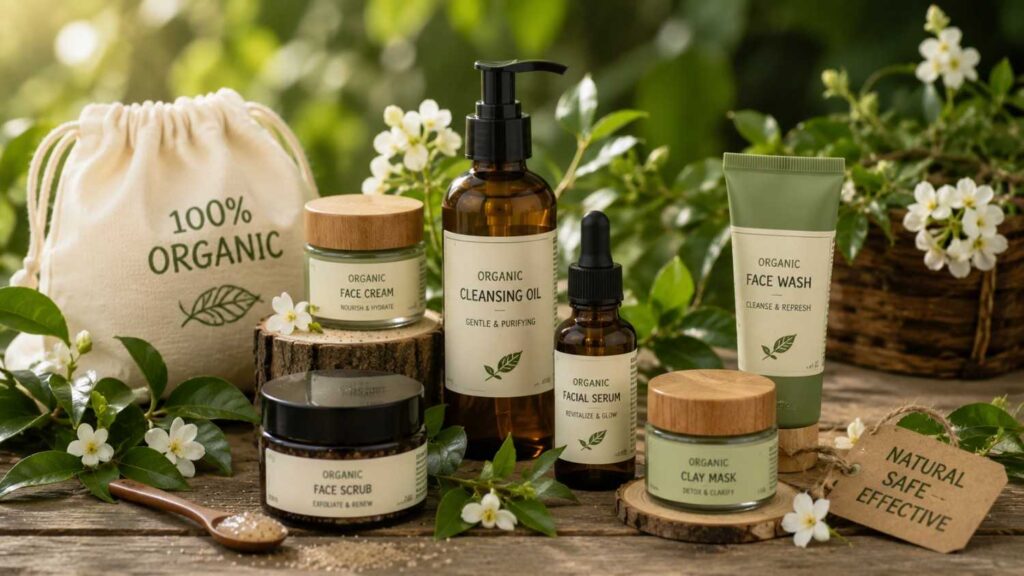
The Benefits of Organic Beauty Products: A Practical Guide to Smarter, Cleaner Beauty
The Benefits of Organic Beauty Products go far beyond attractive packaging, botanical scents, or trendy skincare claims. For many people, organic beauty represents a more thoughtful way to care for the skin while also paying attention to ingredient sourcing, environmental impact, and long-term product choices. Organic skincare products, organic cosmetics, and organic personal care products are becoming popular because consumers want to know what they are applying to their face, hair, and body every day.
At the same time, it is important to approach organic beauty with a balanced mindset. Not every product labeled “natural,” “clean,” or “green” is automatically organic, and not every organic formula is perfect for every skin type. Some plant extracts, essential oils, and fragrance ingredients can still cause sensitivity. A professional beauty routine should focus on evidence, label reading, skin compatibility, and realistic expectations.
In this guide, we will look at The Benefits of Organic Beauty Products in a practical and beginner-friendly way. We will also explain how to understand certifications, compare organic and natural beauty products, choose formulas wisely, avoid greenwashing, and build a routine that supports both your skin and your values.
What Are Organic Beauty Products?
Organic beauty products are skincare, makeup, hair care, body care, and personal care products made with organic agricultural ingredients. These ingredients may include plant oils, botanical extracts, herbs, waxes, butters, hydrosols, essential oils, and other naturally derived materials that come from organic farming systems. In simple terms, organic beauty focuses on how ingredients are grown, processed, handled, and labeled before they reach the final product.
In the United States, the USDA explains that cosmetics, body care products, and personal care products can be certified organic if they contain agricultural ingredients and meet the requirements of the USDA National Organic Program. This means the organic claim is not only about what is inside the bottle but also about the production and handling system behind those ingredients.
For beginners, the easiest way to understand organic beauty is this: organic beauty products are not simply “plant-based products.” They are products that should follow specific organic standards when they make certified organic claims. This distinction matters because many products use green colors, leaf icons, or words like “pure” and “natural” without having formal certification. That does not always mean the product is bad, but it does mean the shopper needs to look deeper before trusting the claim.
Organic beauty products may include moisturizers, cleansers, face oils, lip balms, shampoos, conditioners, deodorants, foundations, mascaras, and body lotions. Their value depends on certification, ingredient quality, formula safety, transparency, and how well the product suits your skin or hair needs.
Organic vs. Natural vs. Clean Beauty
The terms organic, natural, and clean beauty are often used together, but they are not identical. Organic usually refers to ingredients that are grown and processed according to recognized organic standards. Natural beauty products, on the other hand, may contain ingredients derived from plants, minerals, or other natural sources, but the word “natural” itself does not always prove that the product is certified, regulated, or produced under organic farming practices.
Clean beauty is another popular term, but it can be even less specific. Many brands use “clean” to describe formulas made without certain ingredients they choose to avoid, such as parabens, phthalates, sulfates, or synthetic fragrance. However, there is no single universal definition of clean beauty that applies to every brand in the same way. One company’s clean beauty standard may be stricter or more transparent than another’s.
This is why ingredient transparency is so important. A product may be natural but not organic. A product may be clean but not certified. A product may be organic but still contain ingredients that do not suit sensitive skin. The safest approach is to read the label, check the certification, and understand the formula instead of relying only on front-of-package claims.
Why Certification Matters
Certification matters because it gives shoppers a more reliable way to verify organic claims. Without certification, a product may use organic-sounding language without proving that its ingredients or production methods meet a recognized standard. In the U.S., USDA organic labeling is connected to specific requirements, and products using the USDA Organic seal must comply with National Organic Program rules.
The USDA explains that organic products are managed in a way that supports ecological balance, resource cycling, biodiversity, and reduced reliance on many synthetic materials. For beauty products, this can be especially relevant when formulas contain agricultural ingredients such as shea butter, coconut oil, aloe vera, lavender, chamomile, calendula, sunflower oil, or jojoba oil.
Internationally, COSMOS is another respected standard for organic and natural cosmetics. COSMOS helps define criteria for cosmetic products that want to make credible organic or natural claims. For consumers, certifications such as USDA Organic or COSMOS Organic can reduce confusion and help identify brands that have gone through third-party review.
Certification is not the only factor that matters, but it is one of the strongest trust signals. A certified product still needs to match your skin type, be properly preserved, and be used correctly, but certification helps protect shoppers from vague or misleading marketing.
The Benefits of Organic Beauty Products for Skin
The Benefits of Organic Beauty Products for skin often begin with ingredient awareness. Many people are not only looking for a moisturizer, cleanser, or serum that works; they also want to understand what is inside the product and why it is there. Organic skincare products often highlight recognizable ingredients such as aloe vera, shea butter, coconut oil, argan oil, jojoba oil, rosehip oil, calendula, green tea, and chamomile. These ingredients can support hydration, comfort, and a more mindful skincare experience when they are formulated correctly.
Another benefit is that organic beauty products often encourage a simpler routine. Instead of using many heavily fragranced or overly complex formulas, shoppers may choose fewer products with clearer ingredient lists. This can be helpful for people who want to reduce unnecessary steps and focus on the essentials: cleansing, moisturizing, sun protection, and targeted treatments when needed.
However, it is important to avoid making exaggerated claims. Organic skincare products do not automatically cure acne, reverse aging, remove pigmentation, or prevent irritation. Skin health depends on many factors, including genetics, skin type, climate, hormones, diet, sleep, medication, and product compatibility. Organic beauty can support a thoughtful skincare routine, but it should not replace dermatological advice for serious skin conditions.
Used wisely, organic beauty products can help users become more intentional about what they buy, how they use it, and how their skin responds over time.
Better Ingredient Transparency
One major benefit of organic beauty products is improved ingredient transparency. Certified organic skincare products must provide clearer information about the ingredients they contain and, in many cases, how those ingredients are sourced. This can make it easier for shoppers to identify plant-based oils, botanical extracts, waxes, and other agricultural ingredients used in the formula.
Ingredient transparency is especially helpful because many consumers are now more careful about what they apply to their skin. Instead of choosing a product only because it smells good or looks luxurious, people want to know whether it contains fragrance, essential oils, alcohol, preservatives, synthetic colorants, or potential allergens. A transparent label allows shoppers to compare products more responsibly.
That said, ingredient transparency does not mean every ingredient name will be simple. Cosmetic ingredients are often listed using standardized naming systems, so even natural ingredients may appear under formal names. For example, shea butter may appear as Butyrospermum Parkii Butter. Jojoba oil may appear as Simmondsia Chinensis Seed Oil.
The key is not to fear scientific ingredient names. The key is to understand what the ingredient does, whether it suits your skin, and whether the product’s claims are supported by credible labeling.
A Gentler Routine for Some Skin Types
Organic beauty products may support a gentler skincare routine for some users, especially when the formulas are simple, fragrance-free, and designed for sensitive skin. Many people with dry, mature, or easily irritated skin prefer moisturizers and oils made with ingredients such as shea butter, sunflower oil, oat extract, aloe vera, or jojoba oil because these ingredients can feel comforting and nourishing.
However, “organic” should not be confused with “non-irritating.” Some organic skincare products contain essential oils, botanical extracts, or natural fragrance compounds that can trigger redness, itching, burning, or contact dermatitis in sensitive individuals. The American Academy of Dermatology notes that natural or clean skincare products can still cause reactions, and fragrance is a common trigger for contact dermatitis.
For this reason, I usually recommend choosing fragrance-free organic products if your skin is reactive. A shorter ingredient list can also help because it makes it easier to identify what works and what does not. Patch testing is another smart step before applying a new product to the entire face or body.
A gentle routine is not about choosing the most expensive product. It is about choosing the most suitable product for your skin barrier, lifestyle, and tolerance level.
Environmental and Ethical Advantages
The Benefits of Organic Beauty Products also connect strongly to environmental and ethical values. Many consumers choose organic personal care products because they want beauty routines that feel more responsible, less wasteful, and more aligned with sustainable living. When a beauty product uses certified organic agricultural ingredients, it may support farming methods that focus on soil health, biodiversity, reduced reliance on many synthetic substances, and more responsible land management.
This environmental angle matters because beauty is not limited to what happens after a product touches the skin. Every product has a supply chain. Ingredients must be grown, harvested, processed, transported, manufactured, packaged, shipped, used, and eventually discarded. Organic beauty cannot solve every environmental issue, but it can encourage more conscious choices across that chain.
Ethical beauty also includes how workers are treated, how ingredients are sourced, whether animal testing is involved, and whether packaging creates unnecessary waste. A truly responsible beauty product should not rely only on one claim, such as “organic.” It should also offer transparency around sourcing, testing policies, packaging materials, and brand practices.
For advanced readers, this is where sustainability becomes more complex. A product may contain organic ingredients but still use excessive plastic packaging. Another product may be cruelty-free but not organic. A third may be natural but not responsibly sourced. The best choice often comes from evaluating several trust signals together rather than depending on a single marketing phrase.
Support for Organic Farming Practices
Organic beauty products can support organic farming practices when they use certified organic agricultural ingredients. These may include oils, herbs, flowers, fruits, seeds, waxes, butters, and plant extracts grown under organic standards. Organic farming systems are generally designed to reduce reliance on many synthetic inputs and support ecological balance, though the exact requirements depend on the certification system and country.
For example, ingredients such as organic coconut oil, organic aloe vera, organic shea butter, organic lavender, organic calendula, and organic sunflower oil often come from agricultural supply chains. When brands choose certified organic versions of these ingredients, they may help create demand for growers who follow organic production methods.
This does not mean every organic beauty product has a perfect environmental footprint. Farming is only one part of sustainability. Water use, energy use, packaging, shipping distance, manufacturing methods, and product waste also matter. A heavy glass jar shipped internationally may have a different environmental impact than a lighter package produced locally.
Still, organic sourcing remains a meaningful step. It gives consumers a practical way to support ingredient systems that prioritize organic standards instead of purely conventional production. When combined with refillable packaging, responsible sourcing, and low-waste habits, organic beauty can become part of a broader eco-conscious lifestyle.
Ethical Beauty Beyond Organic Claims
Ethical beauty goes beyond organic ingredients. A product can be organic but not cruelty-free. A product can be cruelty-free but not organic. A product can use recycled packaging but still rely on vague ingredient claims. That is why shoppers should look at the full picture before deciding whether a beauty product matches their values.
Cruelty-free certification, fair trade sourcing, recyclable packaging, refill options, vegan formulas, and supply chain transparency can all contribute to a more ethical beauty routine. For example, if a consumer cares about animal welfare, they may look for third-party cruelty-free certifications. If they care about worker conditions, they may prefer brands that explain how ingredients such as shea butter, cocoa butter, or argan oil are sourced.
Organic claims are valuable, but they should not be treated as the only measure of responsibility. A strong ethical beauty product should be honest about what it can and cannot claim. It should avoid fear-based marketing and provide useful information that helps customers make informed choices.
In my experience, the most trustworthy brands explain their standards clearly. They do not simply say “green,” “safe,” or “non-toxic.” They show certifications, publish ingredient details, discuss packaging decisions, and give customers enough information to compare products responsibly.
How to Choose Organic Beauty Products Wisely
Choosing organic beauty products wisely requires more than picking the prettiest bottle on the shelf. The beauty industry is full of attractive claims, and terms such as organic, natural, botanical, clean, green, eco-friendly, and sustainable can appear on products with very different standards. To make a smart purchase, you need to understand the label, check the certification, evaluate the ingredient list, and think about how the product fits your skin type.
The first step is to identify your actual need. Are you looking for a gentle cleanser, a daily moisturizer, a face oil, a body lotion, an organic shampoo, or organic makeup? A product should solve a real problem in your routine. Buying organic just because it is trendy can lead to wasted money and unnecessary product buildup.
Next, look at whether the product is leave-on or rinse-off. Leave-on products such as moisturizers, serums, balms, oils, deodorants, and makeup stay on your skin longer, so ingredient compatibility matters more. Rinse-off products such as cleansers, shampoos, conditioners, and body washes still matter, but they have shorter contact time.
Finally, do not forget product safety. Organic formulas still need appropriate preservation, stable packaging, clear usage directions, and realistic expiration dates. A high-quality organic beauty product should be both naturally inspired and professionally formulated.
Step-by-Step Buying Checklist
A simple buying checklist can help you avoid confusion and choose better organic beauty products. First, check whether the product has a recognized certification such as USDA Organic or COSMOS Organic. If a product says “made with organic ingredients,” look closely at what percentage is organic and which ingredients are actually certified.
Second, read the full ingredient list. Do not stop at the front label. Look for ingredients that match your skin type and avoid known triggers. If you have sensitive skin, fragrance-free formulas are often a safer starting point than strongly scented products, even when the scent comes from essential oils.
Third, check the product category. A face oil, cleanser, sunscreen, deodorant, and mascara all have different formulation requirements. Organic ingredients are helpful, but the product must still perform its purpose correctly.
Fourth, patch test before regular use. Apply a small amount to a discreet area and monitor for redness, itching, burning, or swelling. This step is especially important for people with eczema, rosacea, acne-prone skin, or fragrance sensitivity.
Fifth, review the brand’s transparency. A reliable brand should explain its certifications, ingredient choices, sourcing standards, and safety practices clearly. If claims sound too broad or too good to be true, be cautious.
| Buying Factor | Why It Matters | What to Look For |
|---|---|---|
| Certification | Confirms organic claims follow recognized standards | USDA Organic, COSMOS Organic, or another trusted certifying body |
| Ingredient Transparency | Helps you understand exactly what the product contains | Complete ingredient list using INCI names |
| Skin Type Compatibility | Reduces the risk of using unsuitable products | Products formulated for dry, oily, combination, or sensitive skin |
| Fragrance Content | Fragrance can trigger irritation in some individuals | Fragrance-free or clearly disclosed fragrance ingredients |
| Packaging | Protects product quality and may reduce environmental impact | Recyclable materials or airless packaging when appropriate |
| Brand Transparency | Indicates how openly a company explains its sourcing and manufacturing | Clear sourcing, manufacturing, and certification information |
| Shelf Life | Ensures the product remains effective and safe to use | Expiration date or Period After Opening (PAO) symbol |
| Patch Testing | Helps identify potential skin reactions before full use | Test on a small area of skin before regular application |
Organic Beauty Label Comparison Table
Understanding beauty labels can prevent expensive mistakes. Many shoppers assume that all green beauty terms mean the same thing, but the differences can be significant. The table below explains common claims and what you should check before buying.
| Label or Claim | What It Usually Means | What to Check |
|---|---|---|
| USDA Organic | The product may meet USDA organic rules for agricultural ingredients | Certification seal, certifying agent, and organic percentage |
| COSMOS Organic | The product meets COSMOS organic cosmetic criteria | COSMOS signature, approved certifier, and product documentation |
| Natural | The product may include plant-derived or mineral-derived ingredients | Full ingredient list because “natural” is not always certified |
| Clean Beauty | The brand avoids selected ingredients based on its own standard | Brand definition, restricted ingredient list, and transparency |
| Cruelty-Free | The product or brand claims no animal testing | Third-party verification from recognized cruelty-free programs |
| Vegan | The formula does not contain animal-derived ingredients | Certification or ingredient review |
| Fragrance-Free | No added fragrance ingredients | Useful for sensitive or allergy-prone skin |
| Unscented | May contain masking fragrance to hide odor | Ingredient list and allergy information |
A comparison table like this is useful because it turns vague marketing into practical evaluation. If a brand makes several claims, each claim should be supported. For example, an organic product should show certification. A cruelty-free product should show verification. A clean beauty product should explain what “clean” means. This makes the buying process more informed and less emotional.
Best Organic Beauty Products to Consider in a Daily Routine
The Benefits of Organic Beauty Products are easiest to appreciate when they are used strategically in a daily routine. You do not need to replace every product at once. In fact, replacing too many products at the same time can make it difficult to identify what is helping or irritating your skin. A better approach is to start with one or two essentials, observe your skin’s response, and then gradually build from there.
For most people, the best starting point is a product that stays on the skin, such as a moisturizer, facial oil, lip balm, body lotion, or deodorant. These leave-on products have longer contact time, so ingredient quality and compatibility are especially important. After that, you can consider rinse-off products such as cleansers, shampoos, conditioners, and body washes.
Organic makeup is another useful category, especially for people who wear products daily around sensitive areas like the lips, eyes, and face. However, performance still matters. A mascara should not flake easily. A foundation should match the skin tone and feel comfortable. A lip balm should actually moisturize. Organic ingredients are only valuable when the finished product works well.
A strong organic routine should be simple, consistent, and realistic. Choose products that match your lifestyle, budget, climate, skin type, and values.
Organic Skincare Products
Organic skincare products are often the first category people explore because skincare is personal and used daily. Common options include cleansers, toners, face oils, moisturizers, masks, lip balms, exfoliants, and body lotions. Many of these formulas use plant oils, botanical extracts, butters, and hydrating ingredients to support skin comfort and moisture.
For dry skin, organic products containing shea butter, jojoba oil, avocado oil, sunflower oil, or aloe vera may feel nourishing. For oily or acne-prone skin, lighter textures are usually better. Ingredients such as jojoba oil, aloe vera, or lightweight gel moisturizers may be preferable to heavy balms. For sensitive skin, fragrance-free and essential-oil-free options are often worth considering.
The key is to match the product to your skin type rather than assuming that organic automatically means suitable. A rich organic balm may be excellent for dry elbows but too heavy for acne-prone facial skin. A botanical toner may feel refreshing but could irritate if it contains strong fragrance components.
When adding organic skincare products, introduce one product at a time. This makes it easier to evaluate results and identify any ingredient that causes discomfort.
| Product Category | Common Organic Ingredients | Primary Benefit | Best For |
|---|---|---|---|
| Facial Cleanser | Aloe vera, chamomile, green tea | Gently removes dirt while helping maintain the skin barrier | Normal, sensitive, and combination skin |
| Moisturizer | Shea butter, jojoba oil, sunflower oil | Hydrates and helps reduce moisture loss | Dry and normal skin |
| Face Oil | Argan oil, rosehip oil, squalane | Nourishes and supports softer-looking skin | Dry and mature skin |
| Lip Balm | Beeswax, coconut oil, cocoa butter | Protects lips from dryness and environmental stress | Daily lip care |
| Body Lotion | Aloe vera, calendula, shea butter | Provides long-lasting hydration for the body | Dry or rough skin |
| Shampoo | Coconut-derived cleansers, botanical extracts | Cleanses hair while supporting scalp comfort | Daily hair care |
| Conditioner | Argan oil, aloe vera, oat extract | Helps improve softness and manageability | Dry or damaged hair |
| Organic Makeup | Plant oils, natural waxes, mineral pigments | Adds color while using naturally derived ingredients | Everyday makeup routine |
Organic Makeup, Hair Care, and Body Care
Organic makeup, hair care, and body care products can help extend a conscious beauty routine beyond skincare. Organic makeup may include lip tints, foundations, blushes, mascaras, concealers, and powders made with plant-based oils, waxes, and mineral pigments. These products appeal to users who want daily cosmetics with more transparent ingredient choices.
Hair care is another important category. Organic shampoos, conditioners, scalp oils, and hair masks may contain ingredients such as aloe vera, coconut oil, argan oil, shea butter, rosemary, chamomile, or tea tree. However, hair type matters. Curly, dry, oily, fine, color-treated, and textured hair all need different formulas. A product that works beautifully for thick dry hair may feel too heavy for fine hair.
Body care includes organic body lotions, hand creams, deodorants, soaps, body oils, scrubs, and balms. These products are often used over larger areas of skin, so texture, absorption, scent, and sensitivity should all be considered.
The best routine is not the one with the most organic products. It is the one that performs well, supports your values, and keeps your skin, scalp, and hair comfortable over time.
Common Myths About Organic Beauty Products
Organic beauty is helpful, but it is also surrounded by myths. Some marketing messages make organic products sound automatically safer, healthier, or more effective than all conventional products. Other messages suggest that anything synthetic is harmful and anything natural is good. These oversimplifications can confuse consumers and lead to poor buying decisions.
A professional approach to The Benefits of Organic Beauty Products should include both the advantages and the limitations. Organic ingredients can support transparency, sustainability, and mindful product selection. But product safety depends on the full formula, not only the source of the ingredients. Preservation, concentration, allergen potential, contamination risk, packaging, and usage instructions all matter.
It is also important to understand that conventional beauty products are not automatically bad. Many well-formulated conventional products are safe, effective, dermatologist-tested, and suitable for sensitive skin. Likewise, many organic products are excellent, but some may be poorly formulated or unsuitable for certain users.
The goal is not to create fear. The goal is to help readers become more informed. Once you understand the common myths, you can avoid greenwashing, choose better formulas, and build a beauty routine based on evidence rather than assumptions.
Myth 1: Organic Always Means Safer
One of the most common myths is that organic always means safer. This sounds appealing, but it is not fully accurate. The FDA explains that an ingredient’s source does not determine its safety. In other words, a plant-derived ingredient can still cause irritation, and a synthetic ingredient can be safe when properly tested and used at appropriate levels.
This is especially important for people with sensitive skin, eczema, allergies, rosacea, or acne-prone skin. Some organic products contain essential oils, citrus extracts, herbal blends, or natural fragrance compounds that may cause reactions. Lavender, peppermint, tea tree, cinnamon, citrus oils, and other botanicals can be useful in some formulas but irritating in others.
A safer approach is to evaluate the complete product. Ask questions such as: Is it fragrance-free? Is it properly preserved? Is it made for my skin type? Has the brand provided clear usage instructions? Does it contain known allergens for me?
Organic beauty products can be a great choice, but they should not be treated as risk-free. Smart selection, patch testing, and label reading remain essential.
Myth 2: Organic Products Do Not Need Preservatives
Another common myth is that organic products do not need preservatives. This is not true for many formulas. Any water-based product, such as a lotion, cream, cleanser, toner, shampoo, or conditioner, can be vulnerable to microbial growth if it is not properly preserved. Preservation helps maintain product quality and reduce contamination risk during normal use.
Some consumers worry about preservatives because they associate them with harsh chemicals. However, a properly preserved formula is often safer than an unpreserved or poorly preserved one. Without preservation, a product may spoil quickly, develop an unpleasant odor, change texture, separate, or become unsafe to use.
Organic and natural beauty brands may use preservation systems that align with their formulation standards, but the product still needs to be stable. This is especially important for products stored in bathrooms, where heat, steam, and repeated contact with hands can increase contamination risk.
Consumers should always check expiration dates, storage instructions, and packaging. Pump bottles and tubes often reduce contamination better than open jars. If an organic product changes smell, color, texture, or causes irritation, it is best to stop using it.
Quick Answer About The Benefits of Organic Beauty Products
The Benefits of Organic Beauty Products include better ingredient awareness, more transparent sourcing, support for organic farming practices, and a more intentional approach to daily skincare, makeup, hair care, and body care. Many people choose organic beauty products because they want formulas made with recognizable plant-based ingredients, fewer unnecessary additives, and clearer information about how ingredients are grown or processed.
However, it is important to understand that “organic” does not automatically mean a product is safer, hypoallergenic, or suitable for every skin type. The FDA explains that an ingredient’s source alone does not determine its safety, and even natural or plant-based ingredients can cause irritation in some people. That is why I recommend looking for credible certifications, reading the full ingredient list, avoiding vague marketing claims, and patch testing new products before regular use. When chosen carefully, organic beauty products can be a valuable part of a cleaner, more sustainable, and skin-conscious routine.
Frequently Asked Questions
Frequently asked questions are important because many people researching The Benefits of Organic Beauty Products are still trying to separate facts from marketing claims. Some readers want to know whether organic skincare is better for sensitive skin. Others want to understand certification, safety, value, and how organic products compare with natural or clean beauty products.
This FAQ section answers common search-intent questions in a clear and practical way. The goal is to give quick, useful answers while still providing enough detail for readers who want to make smarter purchasing decisions. Organic beauty can be a strong choice, but it works best when consumers understand what the label means, what it does not mean, and how to evaluate products based on their own skin needs.
For best results, use these answers as a buying guide rather than a strict rulebook. Every person’s skin is different. A product that works beautifully for one person may not work for another, even if it is certified organic. The most reliable approach is to choose carefully, introduce products slowly, and pay attention to how your skin responds.
Are organic beauty products better for your skin?
Organic beauty products can be better for your skin when they are well formulated, suitable for your skin type, and made with high-quality ingredients. Many people like them because they often provide more ingredient transparency and use plant-based oils, butters, waxes, and botanical extracts. These qualities can support a simpler and more mindful skincare routine.
However, organic does not automatically mean better for everyone. If you have sensitive skin, acne, rosacea, eczema, or allergies, you still need to check for fragrance, essential oils, comedogenic ingredients, and known irritants. A certified organic product may still cause a reaction if your skin does not tolerate one of its ingredients.
The best choice is a product that combines organic sourcing with good formulation, proper preservation, clear labeling, and skin-type compatibility. Patch testing is always recommended before regular use.
What is the difference between organic and natural beauty products?
The difference between organic and natural beauty products mainly comes down to standards and verification. Organic beauty products are usually connected to certified organic agricultural ingredients and may follow recognized rules such as USDA Organic or COSMOS Organic standards. Natural beauty products may contain plant-derived or mineral-derived ingredients, but the word “natural” alone does not always prove certification.
A natural product can include helpful ingredients, but it may not tell you how those ingredients were grown, processed, or handled. Organic certification gives shoppers a stronger trust signal because it is tied to specific requirements and third-party review.
That said, organic and natural products can overlap. A product may be both natural and certified organic. The important step is to look beyond the marketing language. Check the certification seal, ingredient list, brand explanation, and product documentation before making a decision.
Are organic cosmetics safer than regular cosmetics?
Organic cosmetics are not automatically safer than regular cosmetics. The FDA states that an ingredient’s source does not determine its safety, which means both organic and conventional ingredients must be evaluated based on how they are used in the formula. A natural plant extract can irritate the skin, while a synthetic ingredient can be safe when properly tested and used correctly.
Safety depends on the complete product. This includes ingredient concentration, preservation, contamination control, allergens, packaging, directions for use, and skin compatibility. For example, an organic mascara still needs to be safe for use around the eyes. An organic face cream still needs proper preservation if it contains water.
Organic cosmetics can be an excellent choice for people who value certified sourcing and ingredient transparency, but safety should always be assessed product by product. Read labels, choose reputable brands, and stop using any product that causes discomfort.
How do I know if skincare is truly organic?
To know if skincare is truly organic, look for a recognized certification rather than relying only on words like “pure,” “botanical,” “green,” or “natural.” Certifications such as USDA Organic or COSMOS Organic are stronger indicators because they require products to meet defined standards. The label should also identify the certifying body or provide clear information about organic ingredient content.
Next, review the ingredient list. Some products may contain only one or two organic ingredients while the rest of the formula is not organic. Others may be fully certified according to a specific category. The details matter.
You can also check the brand’s website for certification documents, sourcing explanations, and ingredient transparency. A trustworthy brand should make this information easy to find. If a product makes broad organic claims but does not show certification or explain its standard, it is worth being cautious.
Can organic skincare irritate sensitive skin?
Yes, organic skincare can irritate sensitive skin. Many people assume that plant-based or organic ingredients are automatically gentle, but sensitive skin can react to natural fragrance compounds, essential oils, herbal extracts, exfoliating acids, preservatives, or even certain plant oils. Organic does not mean allergy-free.
If your skin is sensitive, look for fragrance-free organic skincare products with shorter ingredient lists. Avoid strongly scented formulas, especially those with multiple essential oils, unless you already know your skin tolerates them. Products designed for sensitive skin should focus on barrier support, hydration, and minimal irritation risk.
Patch testing is especially important. Apply a small amount of the product to a limited area and monitor your skin before using it widely. If you experience burning, itching, redness, swelling, or rash, stop using the product and consider consulting a dermatologist.
Are organic beauty products worth it?
Organic beauty products can be worth it if they align with your values, work well for your skin, and come from transparent brands. Many people are willing to pay more for certified organic skincare, organic cosmetics, and eco-friendly beauty products because they value ingredient sourcing, environmental responsibility, and clearer labeling.
However, price alone does not prove quality. An expensive organic product is not automatically better than a moderately priced product with a stronger formula. Likewise, a product should not be purchased only because it has attractive packaging or trendy claims.
To decide whether an organic product is worth it, evaluate performance, certification, ingredients, packaging, brand transparency, and your personal results. If the product improves your routine, suits your skin, and supports your buying priorities, it may be a good investment.
What should I look for before buying organic beauty products?
Before buying organic beauty products, check the certification, ingredient list, product type, fragrance status, expiration date, and brand transparency. Certification helps confirm whether the organic claim is credible. The ingredient list helps you identify potential allergens, irritants, or ingredients that do not match your skin type.
You should also consider how the product will be used. A leave-on facial product requires closer evaluation than a rinse-off body wash because it stays on the skin longer. If you have sensitive skin, choose fragrance-free formulas and introduce one product at a time.
Finally, review the brand’s claims. Be cautious of products that promise unrealistic results or use fear-based marketing. A trustworthy organic beauty product should provide clear information, realistic benefits, and a formula that is suitable for its intended use.
Conclusion
The Benefits of Organic Beauty Products are strongest when they are understood clearly and applied wisely. Organic beauty can support better ingredient awareness, more responsible sourcing, cleaner purchasing habits, and a more intentional approach to skincare, makeup, hair care, and body care. For many consumers, this makes organic beauty products a meaningful part of a healthier-looking and more values-driven routine.
However, organic should not be treated as a shortcut or guarantee. A product still needs to be safe, stable, well formulated, properly preserved, and suitable for your skin type. The smartest approach is to combine organic certification with label reading, patch testing, and realistic expectations.
If you are just starting, begin with one product that stays on your skin, such as a moisturizer, balm, face oil, or body lotion. Choose a certified formula, check for fragrance if you are sensitive, and monitor how your skin responds. Over time, you can build a more complete organic beauty routine that supports both performance and personal values.
